

A Packaging Style That Continues to Serve Modern Brands
Packaging trends, consumer expectations and retail environments continue to evolve, yet certain packaging structures remain consistently relevant across different industries. Among them, custom tuck end boxes continue to be one of the most widely used folding carton solutions for retail products, promotional packaging and e-commerce applications.
From where we stand, part of their long-term popularity comes from their ability to balance presentation, practicality and production efficiency. They offer a clean appearance on store shelves, ship efficiently in flat form, assemble quickly during packing, and can be adapted to a wide range of products without requiring complicated structural modifications.
Whether used by established international brands or growing businesses launching new product lines, tuck end cartons continue to provide a flexible packaging solution that can evolve alongside changing market requirements.
What Is a Tuck End Box and Why Has It Become So Common?
A tuck end box is a folding carton structure that closes using paperboard flaps folded inward at the top and bottom of the package. Depending on the design, cartons may use a Straight Tuck End (STE) or Reverse Tuck End (RTE) configuration, both of which are widely used throughout the packaging industry.
Although the structure itself is relatively simple, its advantages are significant. Cartons can be shipped and stored flat before assembly, helping reduce warehousing and transportation costs. During production and fulfillment, they can be assembled quickly without additional adhesives or complicated equipment.
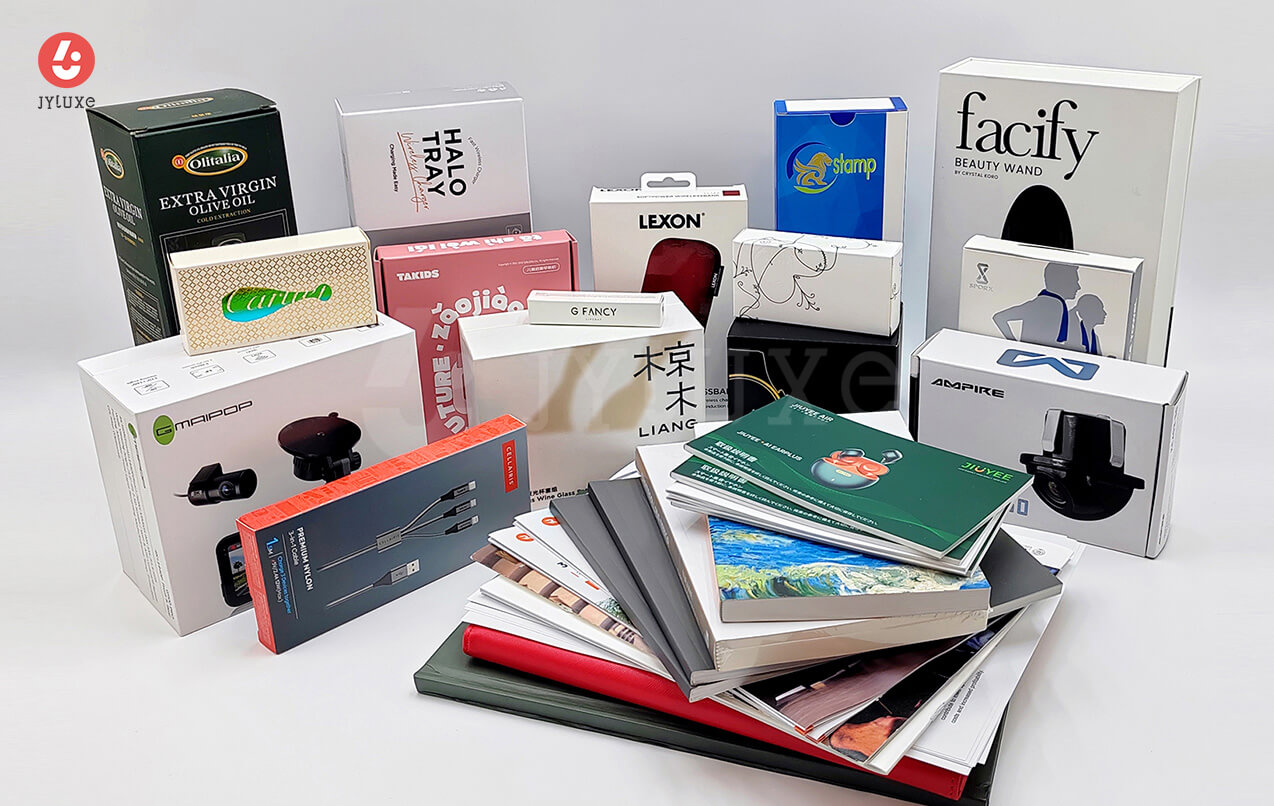
This practical design has contributed to the widespread use of tuck end packaging across cosmetics, skincare, supplements, tea and coffee products, electronics accessories, stationery, personal care items, promotional gift sets and many other retail products. Rather than being limited to a particular industry, tuck end cartons are often selected because they can adapt to the requirements of different products while maintaining a professional appearance.
Why Do So Many Brands Continue to Use Tuck End Packaging?
One reason is flexibility.
Packaging requirements vary considerably between industries, product categories and sales channels. A skincare brand may focus on premium finishes and shelf appeal, while a supplement company may prioritize product information and compliance requirements. Specialty food brands may seek environmentally conscious materials, whereas electronics companies may focus on product protection and presentation.
Tuck end cartons accommodate all of these objectives without requiring entirely different packaging structures.
Another advantage is scalability. The same structural style can often be used across multiple product lines, helping brands maintain consistency while simplifying packaging development and production.
For many businesses, this combination of flexibility, efficiency and professional presentation makes tuck end boxes a practical long-term packaging choice.
Which Products Are Best Suited for Custom Tuck End Boxes?
One of the reasons tuck end cartons remain so popular is their broad applicability.
They are commonly used for cosmetic products, skincare collections, nutritional supplements, pharmaceutical products, tea and coffee packaging, confectionery items, candles, electronics accessories, stationery products, apparel accessories and promotional gift packaging. At the same time, they are equally suitable for many emerging product categories and niche retail applications.
Because dimensions, materials, printing specifications and finishing effects can all be customized, the structure can be tailored to the product rather than forcing the product to fit a predetermined packaging format.
This flexibility is particularly valuable for brands that expect their product ranges to expand over time and wish to maintain a consistent packaging identity across multiple SKUs.
What Materials and Printing Options Are Available?
Material selection plays an important role in both product protection and brand presentation.
Depending on the intended application, tuck end boxes may be produced using SBS paperboard, coated duplex board, art paper laminated paperboard, kraft paper, metallic paperboard, textured papers, uncoated stocks or other specialty materials.
Different materials create different visual and tactile impressions. A luxury cosmetic brand may prefer textured papers combined with foil stamping, while a natural product brand may favor kraft paper and a more understated design approach. The most suitable material is not necessarily the most expensive one, but the one that aligns with the product's positioning and market objectives.
Offset printing remains the preferred production method for most folding cartons because of its excellent color consistency and ability to reproduce detailed graphics accurately. Depending on branding requirements, cartons may also incorporate Pantone spot colors, UV printing or other specialty printing effects.
Popular finishing options include matte lamination, gloss lamination, aqueous coating, Spot UV, embossing, debossing, foil stamping and soft-touch coatings. When selected appropriately, these finishing techniques can enhance both visual appeal and perceived product value.
Can Tuck End Boxes Help Improve Product Presentation and Brand Perception?
Packaging is often the first physical interaction between a customer and a product.
Before the product itself is experienced, consumers form impressions based on the packaging's appearance, structure, print quality and overall presentation. These impressions can influence how a product is perceived long before it is opened.
Although tuck end cartons are generally considered a practical packaging structure, they can still deliver a strong visual impact when paired with appropriate materials, thoughtful graphic design and carefully selected finishing techniques.
In many successful packaging projects, simplicity often proves more effective than unnecessary complexity. A well-designed folding carton that aligns with the brand's positioning frequently creates a stronger commercial impression than a more elaborate structure that lacks a clear purpose.
How Can Packaging Costs Be Optimized Without Sacrificing Quality?
Packaging optimization involves far more than simply reducing material costs.
Meaningful savings often come from structural improvements, efficient production planning, optimized sheet layouts and selecting materials that provide the desired performance without unnecessary expense.
Experienced packaging manufacturers can often identify opportunities to improve production efficiency while maintaining the visual and functional requirements of the packaging.
The objective should not be to create the lowest-cost carton possible, but rather to achieve an effective balance between presentation, durability, manufacturing efficiency and budget. This approach often produces better long-term results than focusing solely on reducing unit cost.
What Should You Look For When Choosing a Packaging Manufacturer?
Selecting a packaging supplier involves more than comparing quotations.
A capable manufacturing partner should be able to provide support throughout the development process, including structural recommendations, material selection, color management, sampling, production planning, finishing guidance and quality control.
Experience with export packaging, logistics coordination and international communication can also be important for brands sourcing packaging from overseas suppliers.
The ability to identify potential challenges before production begins often saves both time and cost while helping ensure smoother project execution.
Why Does Manufacturing Experience Matter in Custom Packaging Projects?
Successful packaging projects rarely depend on printing quality alone.
Structural design, material compatibility, finishing techniques, production planning and quality management all influence the final outcome. Even visually appealing artwork may require technical adjustments to ensure consistent performance during manufacturing, packing and transportation.
With over two decades of packaging and printing production behind us, we've developed a deeper understanding of how packaging structures, paper materials and printing processes work together throughout the manufacturing cycle. In many cases, relatively small adjustments to a carton structure, paper specification or finishing process can improve production efficiency, enhance presentation or help control unnecessary costs.
This practical manufacturing knowledge can be especially valuable when developing new products, upgrading existing packaging or preparing products for international distribution.
How JYLUXE Supports Brand-Oriented Packaging Development
Founded in 2005, JYLUXE specializes in premium custom packaging and commercial printing solutions for businesses that value brand presentation, product quality and long-term growth.
Operating from a production facility of more than 6,000 square meters in Shenzhen, China, and supported by advanced Heidelberg printing equipment, ISO 9001 and ISO 14001 certified management systems, and an experienced technical team, JYLUXE provides flexible manufacturing solutions for both small-volume and large-scale production requirements.
Beyond manufacturing, support extends throughout the packaging development process. From reviewing artwork files and recommending structural improvements to material selection, sampling, printing, finishing, quality inspection and export coordination, projects are managed with attention to both visual impact and practical production considerations.
The objective is not simply to produce packaging, but to help brands identify packaging solutions that align with their positioning, expected results and budget requirements.
From Packaging Concept to Production: What Does the Custom Process Usually Involve?
At JYLUXE, most custom tuck end box projects begin with a review of artwork files, product specifications and packaging objectives.
Based on the desired presentation, product characteristics and budget requirements, recommendations may be provided regarding structural design, material selection, printing specifications and finishing options. Once dimensions and structural drawings are confirmed, prototype samples are produced for evaluation and approval.
Following sample approval, production proceeds through printing, finishing, die-cutting, folding, quality inspection and final packaging. Throughout the process, close communication helps ensure that the finished packaging accurately reflects both the original design intent and practical manufacturing requirements.
Early collaboration during the development stage often helps reduce unnecessary revisions and improves overall project efficiency.
Looking Beyond the Box: Packaging as Part of Brand Growth
Packaging is no longer viewed solely as a protective container. Increasingly, it functions as part of the overall customer experience and contributes to how products are perceived in competitive markets.
The continued popularity of custom tuck end boxes demonstrates that effective packaging does not necessarily require complicated structures. When thoughtfully designed and properly manufactured, folding cartons can successfully combine presentation, practicality and production efficiency while supporting long-term brand development.
For businesses evaluating new packaging concepts or refining existing packaging systems, working with an experienced manufacturing partner can simplify decision-making and help identify opportunities to improve both packaging performance and perceived value. Whether for cosmetics, supplements, food products, electronics accessories or many other retail applications, custom tuck end boxes remain one of the most versatile and dependable folding carton solutions available today.
- Featured Articles
Four Practical Strategies and Steps for Getting Product Boxes Right
Whether the product packaging box is done well or not, it can be said that it directly affects the product sales, profits, and even brand growth. So, how can companies customize a good product packaging box to achieve both cost savings, but also more valuable benefits? We can divide this into four steps, or four practical strategies...
Exploring Why Collapsible Rigid Boxes
Collapsible rigid boxes are a type of high-end paper packaging box that combine sturdy materials with an exquisite appearance. They can be conveniently collapsed and assembled, and are easy to store and transport. Not only do they effectively reduce packaging costs, but they are also highly favored by many industries for their luxurious quality.