

Black Cardstock / Black Paperboard
Black cardstock and paperboard span from lightweight print card through to structural packaging board — sharing a dark surface that communicates premium or design-forward brand positioning. From gift boxes and jewelry packaging to notebook covers, hang tags, and art book covers, black is as much a material decision as a color choice. • Wide weight range: lighter for hang tags, greeting cards, and covers; heavier for folding cartons, rigid box covering, and gift packaging • Printing on black requires adaptation — white ink, foil stamping, spot UV, and white-underbase-plus-color are all standard approaches • Used across jewelry, gift packaging, electronics, cosmetics, spirits, stationery, fashion, and commercial print

What Is Black Cardstock? Uses for Gift Boxes, Jewelry Packaging, Electronics, and Printed Products
Black packaging looks deliberate in a way other colors don't quite manage. A black gift box, a matte black art book cover, a hang tag with gold foil on black — each communicates something specific about how a brand values its presentation. That effect doesn't come automatically from choosing black; it comes from using the material correctly.
Black cardstock and paperboard span more territory than most people initially assume — from lightweight card for hang tags and greeting cards through to heavy board used as rigid box covering material. The weight range, print approach, and finishing behavior differ significantly across that span.
What Is Black Cardstock / Black Paperboard?
"Black cardstock" is the familiar term in printing, stationery, and design contexts. "Black paperboard" is the packaging industry term for heavier structural grades. In practice, both describe the same material family at different points on the weight scale. The Chinese packaging term Black Cardstock covers the full range.
Two production methods create the black surface, and the distinction matters for packaging:
Through-dyed (solid black throughout) — black pigment is incorporated into the pulp, so the entire cross-section is black. Cut edges show black. For packaging with exposed edges — open-flap boxes, unlined interiors, premium folding cartons — through-dyed board maintains a consistent appearance throughout.
Surface-coated black — black coating over a base board (white, gray, or brown underneath). Cutting reveals the lighter core. For commercial print products, fully lined rigid boxes, and covered packaging structures, surface-coated works well and is generally more economical. For exposed-edge premium packaging, specifying through-dyed explicitly is worth doing.
Weight Range and Applications: Thin to Thick
Black material spans a wide weight range, and typical applications shift considerably across it:
Lighter (roughly 120–200gsm): Hang tags for fashion, jewelry, and accessories; greeting and holiday cards; premium envelopes and postcards; invitation and stationery suites; product inserts and shelf cards. Flexible, easy to die-cut, well-suited to custom shapes.
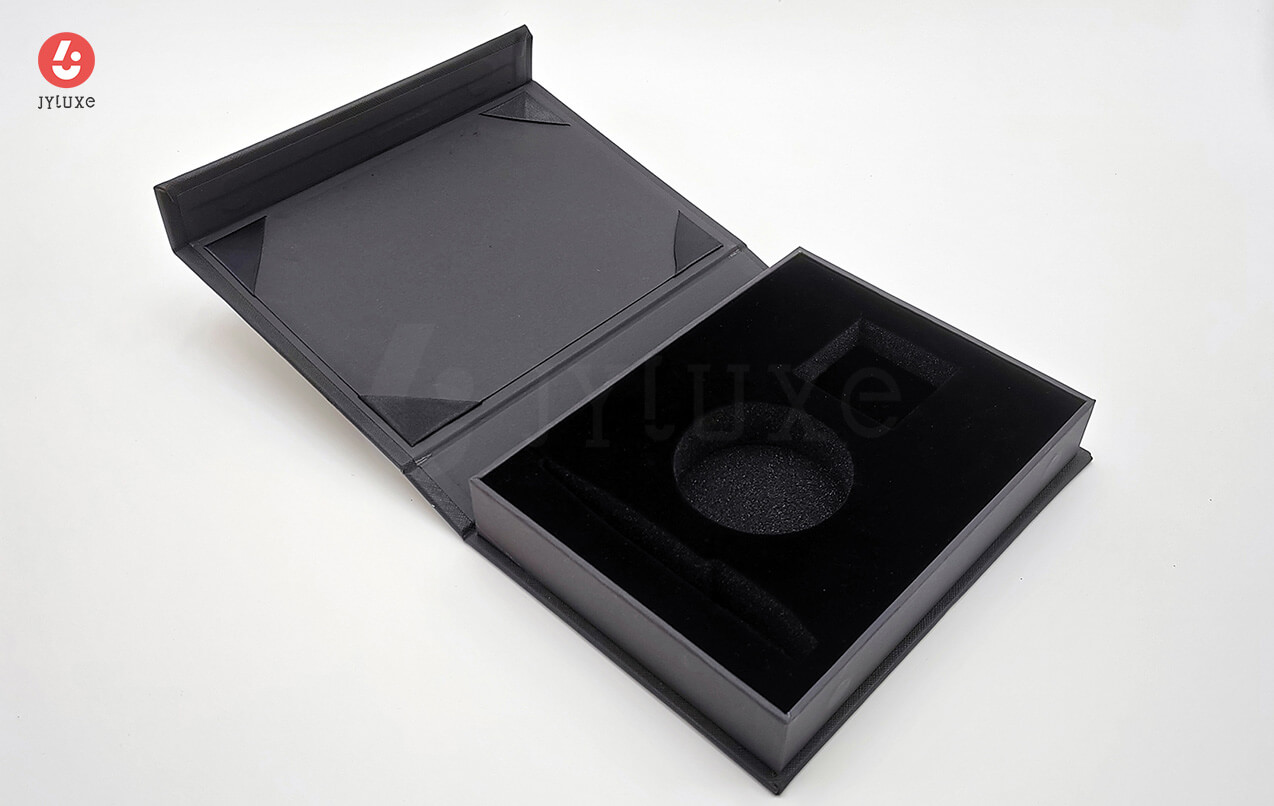
Mid range (around 200–350gsm): Folding cartons for retail and consumer goods; hardcover book and art catalog covers; notebook and journal covers; packaging sleeves; restaurant and hotel menu cards; pocket folders and premium brochure covers. Enough structure for a box to hold shape while remaining compatible with standard folding carton equipment.
Heavier (350gsm and above): Rigid box outer covering paper (laminated over chipboard to form a premium gift box exterior); thick-walled folding cartons for heavier products; corrugated exterior facing for premium shipping cartons; shelf display structures.
Getting the weight right upfront — rather than adjusting after samples — saves meaningful revision time.
Printing on Black: What Works
Standard CMYK printing directly onto black substrate doesn't produce usable results. The approaches that do work:
White ink — screen printing (silkscreen) produces opaque, solid white on dark stock and is the standard method for white on black. Offset white printing is also practical for production volumes; full opacity may require multiple passes. White on deep black has a distinctive graphic clarity that suits minimal, editorial, and high-contrast brand aesthetics well.
White underbase plus color overprint — a white ink layer printed first, then CMYK or spot colors on top. This enables full-color printing on black: images, gradients, multi-color graphics. It adds printing passes and cost, but it's a confirmed standard technique in both packaging and commercial printing.
Hot foil stamping in gold, silver, rose gold, copper, holographic, or colored foil is particularly effective against a black surface. Foil on black is one of the most consistently successful finish combinations in premium packaging — clean contrast, reads as intentional, photographs well. Standard across jewelry, cosmetics, spirits, and luxury gifting.
Spot UV — clear gloss varnish applied selectively over matte black creates contrast between shiny treated areas and the flat dark background. Visual and tactile at once. Widely used for brand marks and pattern details.
Debossing and embossing create texture on black without any ink or foil. The pressed impression catches light differently from the flat surface. On matte black packaging, blind debossing has a restrained, premium quality suited to brands that prefer texture over ornamentation.
Industries and Products That Use Black Cardstock or Paperboard
Black is chosen when packaging or print needs to communicate premium, design-forward, or formal brand positioning. Common applications span both packaging and commercial print:
Jewelry and watches — black boxes and accessories packaging are essentially standard at mid-to-high-end price points.
Electronics and tech accessories — earphones, headphones, smart devices, wearables, and mobile accessories regularly use black cartons and retail packaging as a premium signal.
Cosmetics and beauty — black folding cartons and rigid boxes appear across prestige skincare, fragrance, and makeup brands.
Spirits and premium food — gift boxes for whisky, gin, specialty spirits, premium coffee, and confectionery gifting.
Candles and home fragrance — black is among the most common base materials for artisan candle and home fragrance brands.
Gift and retail packaging — black folding cartons, rigid gift boxes, paper bags, and mailer boxes across premium retail and lifestyle gifting.
Commercial and creative print — art and coffee table book covers; hotel and restaurant menus; branded notebooks, journals, and diaries; greeting and holiday cards; invitation suites; fashion and accessories hang tags.
And across fashion, hospitality, corporate gifting, stationery, e-commerce, and more where black fits the brand's visual direction.
Custom Black Packaging and Print at JYLUXE
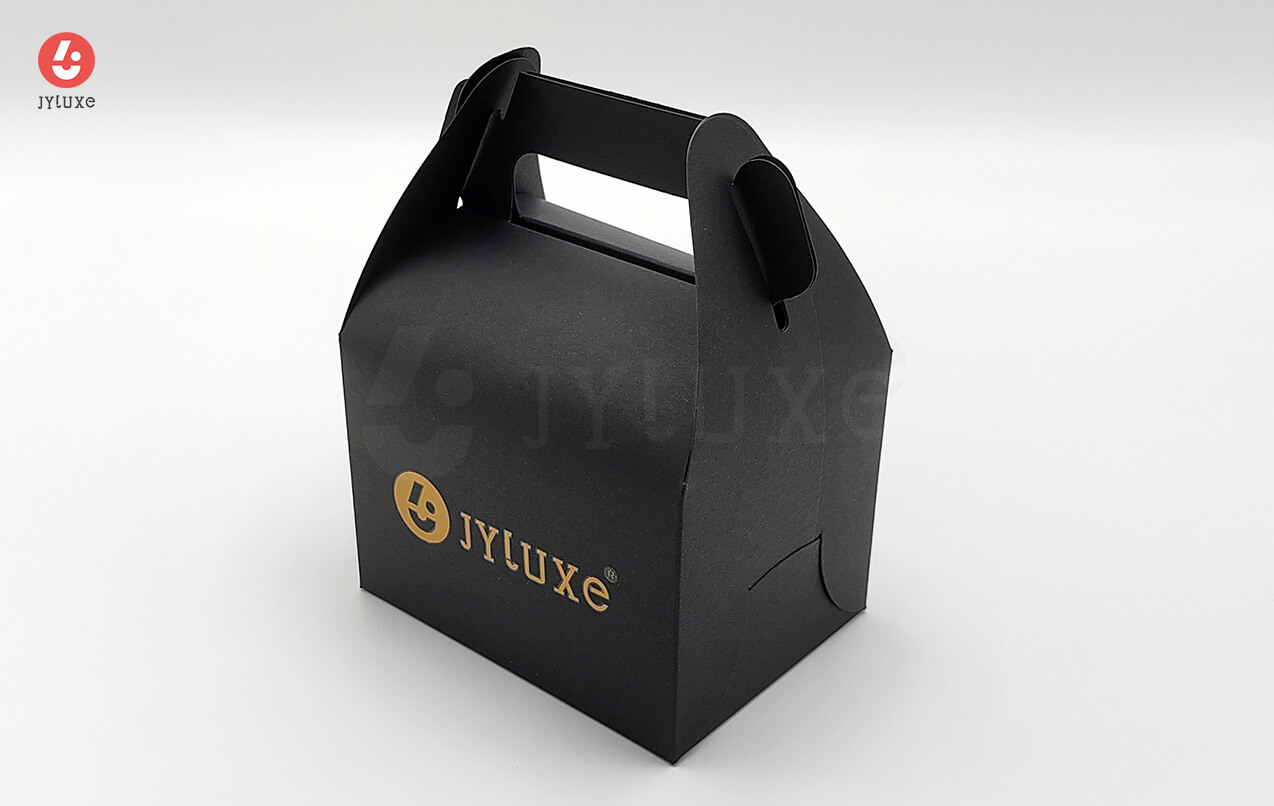
JYLUXE produces custom packaging and printed products using black cardstock and paperboard across the full weight range — folding cartons, rigid box covering paper, paper bags and handle bags, book and catalog covers, notebook covers, hang tags, greeting cards, and more — for clients in cosmetics, electronics, jewelry, spirits, gifting, fashion, stationery, and other sectors.
Established in Shenzhen in 2005, the facility covers over 6,000 square meters with Heidelberg offset printing equipment and full finishing capabilities. ISO 9001 and ISO 14001 certified, with a production team of 100+ trained technicians. Over 3,000 brands and businesses globally have worked with the team.
Pre-production sampling is a standard part of the process for black board projects — white ink opacity, foil adhesion, lamination behavior, and cut-edge appearance all show up clearly in a physical sample and are much harder to evaluate from a specification sheet alone. The team facilitates print and finish testing before production begins, so results are confirmed rather than assumed.
Specialty Black Paper Options
Beyond standard black cardstock and board, specialty grades add design range:
Textured black papers (linen, felt, laid, canvas texture) — add tactile quality to rigid box covering material, premium menus, and high-end stationery.
Velvet / soft-touch black — ultra-matte, slightly soft surface finish closely associated with luxury cosmetics packaging and premium gift boxes. Distinctly soft to the touch.
Metallic and iridescent black — black papers with a subtle metallic or color-shifting surface quality. Reads as black but shifts character under different lighting.
On sustainability: some grades of black board incorporate recycled fiber or carry FSC certification. Whether finished packaging is recyclable depends on the surface treatment — uncoated or minimally finished stock is generally more recyclable than heavily laminated variants. Worth confirming the specifics with the supplier for a particular grade and application.
Finishing Combinations Worth Knowing
A few approaches are consistently effective on black and useful as reference points:
Matte lamination + foil stamping — the matte base deepens the black surface; foil details sit against it with clean, sharp contrast. The most widely used combination in premium black packaging.
Matte lamination + spot UV — selective gloss areas create visual and tactile contrast against the flat matte background. Useful for brand marks and design patterns.
White screen print + foil — white ink handles typography and larger graphic areas; foil handles fine accents or metallic details. Often more interesting than either technique alone.
Blind debossing on matte black — no ink, no foil. The pressed impression creates shadow and depth that reads through touch and light. Well-suited to brands that prefer restraint.
Practical Notes Before Finalizing the Spec
Through-dyed vs. surface-coated — for packaging with exposed cut edges, specify this clearly. When in doubt, request cut-edge samples of both before committing.
Finalize the print approach before design — white ink only, foil only, or white underbase plus color each have different production workflows. Knowing which applies before design completion avoids revision later.
Account for surface sensitivity — matte and soft-touch black surfaces show fingerprints and handling marks more visibly than lighter or gloss materials. Storage and transit packaging should reflect this for premium products.
Is Black the Right Material for Your Project?
Black works well when:
• The brand is positioned in a premium, luxury, or design-confident space and the material supports that • The design works with foil, white ink, spot UV, or embossing — rather than relying on standard CMYK color coverage • The application is in jewelry, electronics, cosmetics, gift packaging, spirits, fashion, stationery, commercial print, or similar sectors where black reads naturally
If the project centers primarily on complex full-color photography, a white substrate may be the more practical base. Black is a confident material choice that performs well when the design is built around what it enables rather than fighting what it doesn't do.
For questions on black cardstock or paperboard grades, print approach options, pre-production samples, or a custom production quote — the JYLUXE team is available for one-on-one consultation at jyluxe.com.