Metallic Paperboard (Gold / Silver / Holographic Board)
Metallic paperboard — covering gold, silver, and holographic board varieties — is primarily a packaging material used for folding cartons, rigid box covering paper, and premium retail packaging where a reflective metallic surface is central to the brand impression. UV printing, white ink, and embossing are the standard approaches for working with this non-absorbent substrate. • Available in gold, silver, and holographic variants, with matte and gloss surface finish options • UV printing and white ink underbase are the standard methods for printing on metallic board • Primarily used in cosmetics, gift boxes, confectionery, jewelry, spirits, and premium retail packaging
What Is Metallic Paperboard? Gold, Silver, and Holographic Board for Gift Boxes, Cosmetic Packaging, and Luxury Retail
Metallic paperboard is one of those materials that tends to make an immediate impression without needing any additional explanation. Gold board catches light differently from across a room; silver board carries a precision and coolness that standard white can't quite replicate; holographic variants shift color with viewing angle in a way that no print effect fully reproduces. These materials are used specifically because that visual impact is built into the substrate itself.
They're also more technically specific than they look. The non-absorbent metallic surface changes how printing works, and the base material beneath the metallic finish determines what the board can actually do in production. Choosing the wrong variant for an application leads to processing or printing issues that don't always surface until samples are in hand.
What Is Metallic Paperboard — and Why the Base Matters More Than the Color
Metallic Paperboard — also called Metallized Board, Foil Board, or Metallized Paper in trade — is paper or board with a metallic surface applied through vacuum metallization or foil lamination over a base substrate. The base is the more important specification:
Metallized SBS Paperboard (Foil-Laminated SBS) applies a metallic surface to an SBS (Solid Bleached Sulfate) paperboard base. The SBS gives the board structural rigidity suitable for folding carton production — it scores, folds, glues, and forms into boxes without the metallic surface cracking. This is the metallic board used for folding carton packaging. In trade, it's commonly called "Metallized Board" or "Foil Board."
Metallized Art Paper (Foil-Laminated Paper) applies a metallic surface to a thinner art paper base, typically in the 175–200gsm range. This format is designed to be laminated and adhered over a rigid substrate — greyboard or chipboard — and is the metallic covering paper wrapped around the exterior of rigid set-up boxes and gift boxes. Sometimes called Laminating Foil Paper in production contexts. It cannot be used as a standalone folding carton material.
The practical implication: a folding carton project needs SBS-based metallic board; a rigid gift box exterior uses the thinner art paper variant. Specifying "gold board" without clarifying the base is one of the most common sources of miscommunication between packaging designers and manufacturers.
Gold, Silver, and Holographic: The Main Varieties
Gold metallic is the most widely used variant — associated with luxury, premium positioning, and festive contexts. Available in gloss (more traditional, highly reflective) and matte (more contemporary, understated) finishes.
Silver metallic is cooler in tone, commonly used in beauty, technology-adjacent packaging, and brands that want metallic quality without the warmth gold implies. Also available in matte and gloss.
Holographic (Laser) metallic shifts through spectral colors depending on viewing angle and light. More visually active than straight gold or silver — used in promotional packaging, seasonal retail, novelty applications, and anywhere visual impact is the explicit priority.
Surface finish (matte or gloss) is worth specifying alongside the color variant, as it affects both visual character and how subsequent printing and finishing behaves on the board.
Weight Range and Applications: Thin to Thick
Thinner art paper range (roughly 128–200gsm): Primarily wrapping and laminating paper for rigid box exteriors — covering gift boxes, set-up boxes, and premium packaging structures. Some commercial print applications also use this range: premium hardcover book or catalog covers, branded notebook covers, promotional materials where a genuine metallic surface is part of the design brief. These are real applications, though secondary to the packaging uses.
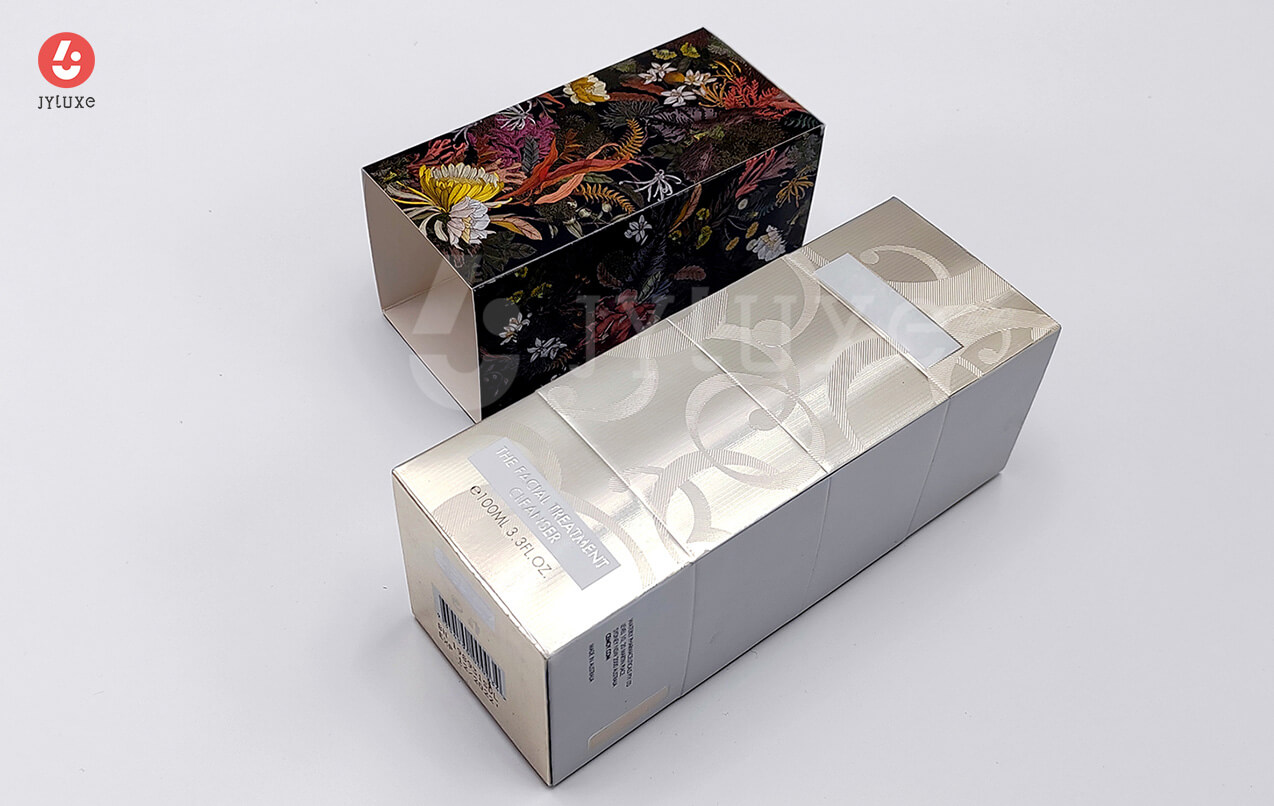
Mid-weight SBS-based folding carton board (roughly 250–400gsm): The primary range for metallic folding carton packaging — cosmetic cartons, confectionery boxes, gift set packaging, premium retail cartons, and holiday packaging. Also used as facing paper on some premium corrugated formats.
Heavier specialty board: For applications requiring more structural rigidity or specific grammage in custom packaging formats.
While commercial print uses — art book covers, branded notebook covers, promotional materials — do exist and take advantage of the genuine metallic surface in ways standard metallic ink printing can't fully replicate, the core territory for metallic board is packaging: folding cartons and rigid box covering are where this material sees the most consistent use.
Printing on Metallic Board: What Works
The metallic surface doesn't absorb ink the way coated white board does. Standard CMYK offset printing directly onto metallic typically produces inconsistent results — ink sits on top of the surface rather than absorbing, and adhesion becomes unreliable without the right approach.
UV printing is the standard method. UV-curable inks cure by ultraviolet light exposure rather than absorption, making them suitable for non-absorbent metallic substrates. UV printing on metallic board handles white ink, spot colors, and full-color work with the right preparation.
White ink underbase for color printing. Full-color CMYK directly onto the metallic surface produces muted, shifted results — the metallic base interferes with how colors read. Printing a white ink layer first, then applying color layers on top, gives the inks a neutral base to sit on and produces results much closer to intended. White ink printed directly onto metallic (for text, logos, or graphic elements without additional color) is a standard approach that doesn't require an underbase.
Reverse UV (negative UV effect). UV varnish applied in specific design zones creates opaque or matte areas against the open metallic background — the contrast between treated and untreated zones creates strong visual depth. Combined with embossing, this technique is used for layered premium effects on cosmetic and gift packaging.
Embossing and debossing. Metallic surfaces interact with light, so embossed or debossed areas create shadow and highlight that shift with viewing angle — more visually active on metallic than on conventional matte surfaces. Commonly used alongside UV and print techniques for premium packaging.
Foil stamping on metallic board (adding foil over foil) is less common but used for specific effects — a darker metallic foil for contrast on a gold base, or holographic foil on silver — in specialty packaging applications.
Industries and Products
Metallic paperboard is concentrated in packaging applications where premium or festive positioning is part of the brief:
Cosmetics and beauty — metallic folding cartons and rigid box covering for skincare, fragrance, and makeup at premium price points. Gold and silver board are standard in the prestige tier of this category.
Gift and seasonal packaging — gold and silver metallic boxes and folding cartons for gift sets, holiday packaging, confectionery, and limited-edition releases. The reflective surface works well in gift retail and unboxing contexts.
Jewelry, watches, and accessories — metallic board for folding cartons and rigid box exterior covering.
Spirits and premium beverages — gift cartons and rigid box covering for premium whisky, gin, wine, and specialty drinks.
Confectionery and premium food — chocolate gift boxes, luxury tea and coffee packaging, pastry and specialty food gifting.
Commercial and creative print (secondary) — art and coffee table book covers, branded notebook covers, promotional materials, and event programs where a genuine metallic surface is part of the design intent.
And across other retail, gifting, and lifestyle categories where the metallic surface itself creates the visual premium impression the brand needs.
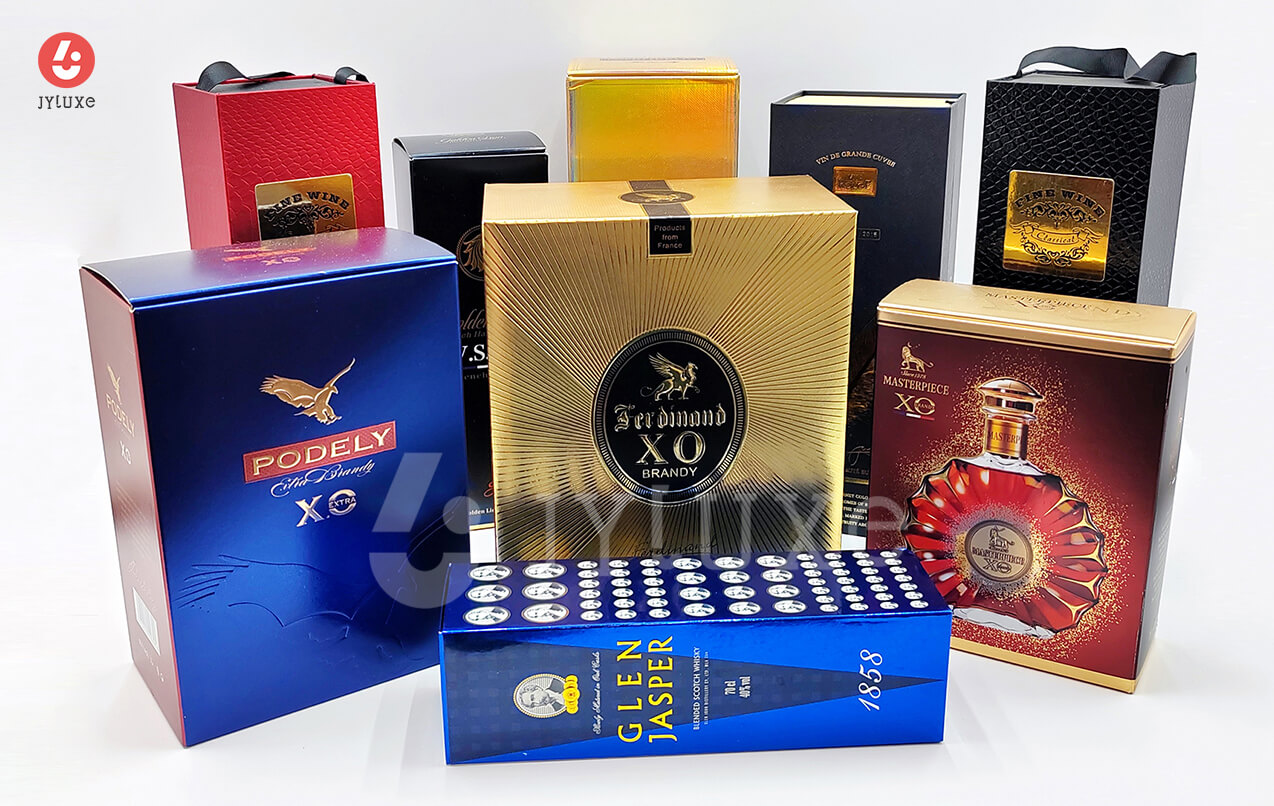
Custom Metallic Packaging at JYLUXE
JYLUXE produces custom packaging using gold, silver, and holographic metallic paperboard — folding cartons, rigid box covering paper, paper bags, and corrugated facing — for clients in cosmetics, gift and retail, confectionery, jewelry, spirits, and consumer goods.
Established in Shenzhen in 2005, the facility covers over 6,000 square meters with Heidelberg offset printing equipment, UV printing capabilities, and a full range of post-print finishing lines. ISO 9001 and ISO 14001 certified, with a team of 100+ trained production technicians. More than 3,000 brands and businesses globally have worked with the team.
For metallic board projects, pre-production sampling is strongly recommended as standard practice. UV ink adhesion, white underbase opacity, reverse UV behavior, and how embossing interacts with a specific metallic surface can all vary between board grades and are much clearer from a physical sample than from a spec sheet. Confirming a printed and finished sample before production begins is the reliable way to ensure results match expectations — and the team builds this into the project workflow as standard.
Finishing Approaches Worth Knowing
Reverse UV + embossing — creating matte or opaque varnished zones against the open metallic surface, then adding embossed detail, produces layered premium effects widely used on cosmetic and luxury gift packaging.
White ink + selective metallic reveal — printing white or color elements that allow the metallic surface to show through in specific areas. The interplay between printed and unprinted zones creates visual depth that a fully printed surface doesn't replicate.
Matte lamination over metallic board — applying a matte film shifts the surface from high-shine reflective to a deeper, more subdued luster. Significantly changes the character of the board and suits brands that want a metallic quality without strong gloss.
Is Metallic Paperboard Right for Your Project?
Metallic board makes practical sense when:
• The brand needs a visual premium or festive signal that comes from the substrate surface itself — not from printing effects applied over a standard white base • The design works with the metallic surface (white ink, reverse UV, embossing, selective reveal) rather than treating it as a neutral printing substrate for standard CMYK • The application is in cosmetics, gift packaging, confectionery, jewelry, spirits, or similar sectors where metallic packaging is a recognized quality and presentation signal
If the design centers on detailed full-color photography as its primary visual element, a white SBS base with selective hot foil stamping may be more production-straightforward — applying foil only where it's needed rather than using a metallic base throughout. Both approaches are valid; the right choice depends on how central the metallic surface is to the design intent.
For questions on metallic board grades, surface variants, print approach, pre-production samples, or a custom production quote — reach out to the JYLUXE team at jyluxe.com.