UV Coating Finishing (Spot UV · Full UV Coating · Raised UV · Textured UV)
UV coating is a highly practical post-press finishing technique across packaging and commercial print — adding gloss contrast, tactile surface variation, and surface protection to custom packaging boxes, brand brochures, hardcover books, notebooks, greeting cards and more. Understanding UV processes helps you choose the appropriate surface treatment for your project. • Spot UV applies a high-gloss UV layer selectively to defined design areas, creating sharp visual contrast — highly effective over matte lamination on custom packaging boxes, book covers and printed brochures. • Full UV Coating (Flood UV) covers the entire surface with uniform gloss, enriching colour depth and adding surface durability across packaging and commercial print. • Raised UV and Textured UV extend UV finishing into tactile territory — a raised palpable surface or a frosted sandy texture — produced using the same UV silkscreen equipment, suited to premium packaging boxes, brand brochures and high-end printed collateral.
What Is UV Coating? How Spot UV, Full UV Coating, Raised UV and Textured UV Work for Custom Packaging Boxes, Brochures and Books
UV coating is a post-press finishing technique that applies a clear, UV-cured varnish to a printed surface, adding gloss contrast, tactile dimension, or a frosted texture depending on the type used. Applied after offset printing and typically after lamination, it enhances the visual and tactile quality of packaging boxes, brochures, book covers, notebooks, greeting cards, and a range of other printed materials.
The four main types — Spot UV, Full UV Coating, Raised UV, and Textured UV — each work differently and suit different applications. Understanding how each one functions makes it easier to specify finishes appropriately and get the expected results from a packaging or print project.
What Exactly Is UV Coating — and How Does It Differ from Lamination?
UV coating is a liquid varnish applied to a printed surface — paper, coated card, or paperboard — that cures almost instantly under ultraviolet light. In a standard post-press workflow, it's applied after printing (usually offset) and after any lamination, using either a screen printing machine for selective placement or a dedicated coating unit for full-surface coverage. The cured layer is hard, clear, and resistant to scuffing, and its visual or tactile character depends on the UV formula and method used.
Lamination and UV coating are sometimes used interchangeably in conversation, but they're distinct. Lamination bonds a thin plastic film to the entire printed surface, providing baseline protection and changing the surface character of the whole sheet. UV coating is a liquid varnish that cures to a hard, clear layer and can be applied selectively or as full coverage. Both can produce gloss or matte effects, and both are used in premium packaging and commercial print — often together, with lamination as the base layer and Spot UV applied on top for targeted emphasis. That pairing — most commonly matte lamination plus Spot UV — is a widely used finishing combination in premium packaging and print production. At JYLUXE, this matte plus Spot UV combination is also a frequent choice for our clients.
What Is Spot UV (Spot Gloss UV) — and Why Is It Such a Common Choice for Premium Packaging?
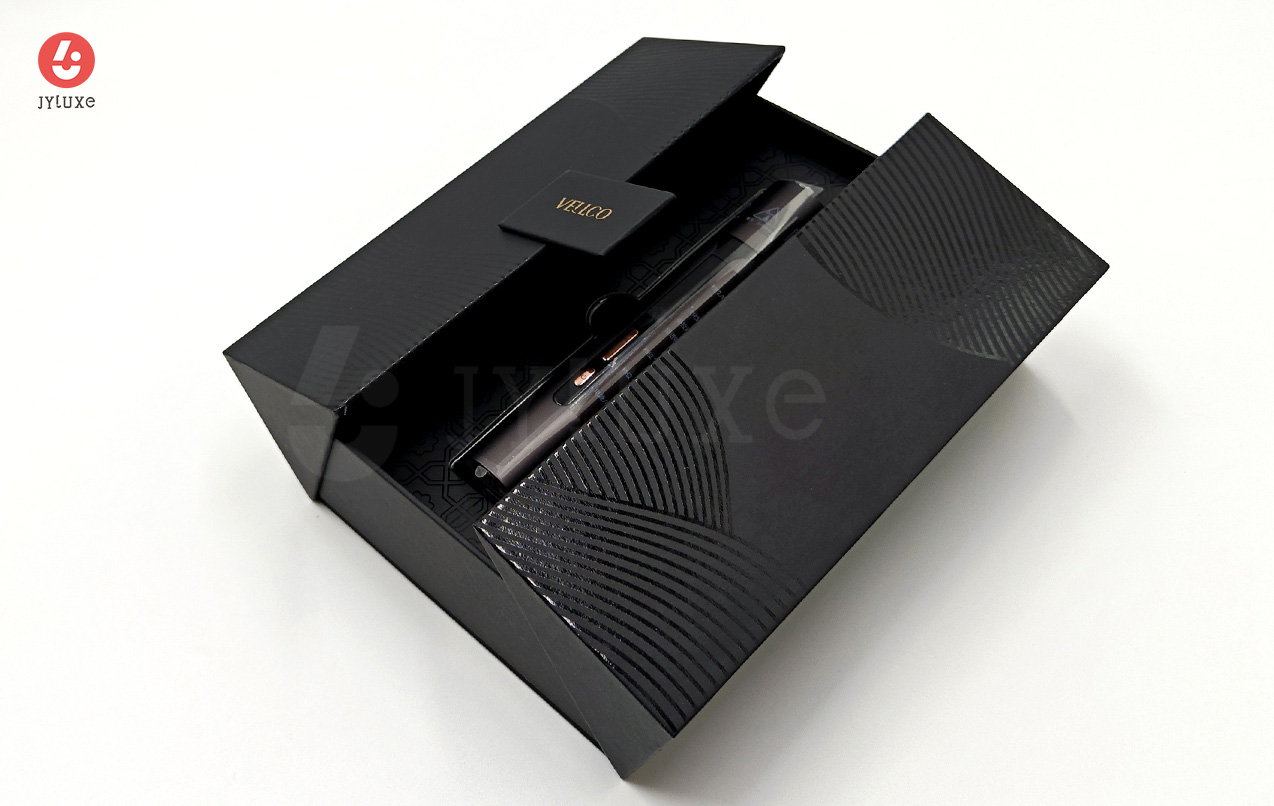
Spot UV applies a high-gloss UV layer to defined areas of the printed surface only — a logo, brand name, product imagery, decorative element, or typographic detail — while leaving the surrounding areas uncoated. The common setup is Spot UV applied over a matte lamination base, where the high-gloss UV zones create sharp visual and tactile contrast against the flat, light-absorbing matte surface around them.
The effect works on two levels: visually, the coated areas catch light more intensely and appear to lift slightly from the surrounding surface; tactilely, the difference between the hard-gloss UV area and the matte base is immediately apparent underhand. Together, those two qualities communicate a deliberate investment in surface quality that reads as a brand signal — particularly in product categories where packaging is part of the product experience.
Spot UV is frequently used across a wide range of packaging and print applications:
• Cosmetics, skincare and beauty packaging — folding cartons, collapsible rigid boxes and rigid gift boxes, where selective gloss on brand marks or product imagery adds premium character on shelf and in unboxing
• Supplement, wellness and health product outer packaging — highlighting brand names, certifications or key product claims
• Electronics and tech accessories boxes — folding cartons and rigid packaging where surface quality contributes to the unboxing experience
• Spirits, wine and premium beverage packaging — shelf differentiation in a competitive retail context
• Hardcover books, coffee table books and art books — cover typography and imagery, typically over matte lamination
• Brand brochures, product catalogues and lookbooks — covers and selected interior pages requiring visual emphasis
• Custom notebooks — brand marks, titles or design elements on hardcover or flexibound covers
• Greeting cards, Christmas and holiday cards, invitation cards and high-end direct mail pieces
• Luxury, jewellery and watch packaging, fashion packaging, corporate gifting, stationery, and more
At JYLUXE, Spot UV over matte lamination is among the most frequently requested finishing combinations — particularly for beauty packaging, wellness supplement boxes, premium rigid gift boxes, and hardcover book and notebook covers.
What Is Full UV Coating (Flood UV) — and When Does It Make Sense?
Full UV Coating — also called Flood UV — covers the entire printed surface with a uniform layer of UV-cured gloss. Where Spot UV is about selective emphasis and contrast, full UV Coating delivers consistent high-gloss coverage across the whole sheet, with colour vibrancy and depth that typically exceeds standard gloss lamination.
Printed images gain saturation and richness under full UV; graphic elements and colours read with more intensity. The hard-cured surface also offers good resistance to scuffing, relevant for packaging and print that undergoes significant handling — retail folding cartons, food packaging, promotional brochures, menus, and similar formats. For projects where overall visual impact and consistent gloss across the whole piece are the priority, rather than selective contrast between coated and uncoated zones, full UV Coating is a practical and commercially well-proven option.
Spot UV or Full UV Coating — Which Makes More Sense for Your Project?
The distinction is fairly clear in principle:
Spot UV works best when the design calls for selective emphasis — drawing attention to specific elements while the surrounding surface stays understated. Its effectiveness depends on contrast, which in turn depends on having a matte base (matte lamination or matte coated stock) for the glossy UV zones to read against. Over gloss lamination or uncoated stock, the contrast is much less pronounced and the effect weakens considerably.
Full UV Coating (Flood UV) works best when consistent gloss and colour enrichment across the entire piece are the objective — overall visual vibrancy rather than targeted emphasis.
The two aren't mutually exclusive in a layered finishing workflow. Some packaging projects combine both: for example, a base UV coating layer on a packaging box panel with Raised UV applied on top for specific design elements. This depends on the production setup and material spec involved.
Material selection also has a direct bearing on the result. Spot UV reads most clearly over matte coated surfaces — matte art paper, matte coated paperboard, soft-touch lamination. On uncoated or heavily textured stock, the contrast softens. For projects where the material-finish interaction isn't clear from the spec sheet alone, requesting a physical sample before committing to a full production run is a practical step. The JYLUXE team can provide practical advice at this stage based on the actual material to ensure the final surface feel meets expectations.
What Is Raised UV (3D UV) — and What Can It Realistically Achieve?
Raised UV — sometimes labelled 3D UV — is a screen-printed UV technique where the coating is built up in multiple layers to create a physically elevated surface. The raised areas are tactile: perceptible underhand and visually dimensional, catching light at a different angle from the surrounding flat surface.
It appears on luxury rigid box covers, collapsible rigid box panels, hardcover book and notebook covers, marketing folder covers, and high-end print collateral where tactile surface dimension is part of the design intent. For product presentations and brand packaging where photographs don't fully capture the physical quality of the piece, Raised UV adds a dimension that's experienced rather than seen.
A practical note on expectations: "3D UV" describes a range of achievable results in commercial production. At the extreme end, very high-relief raised UV — letters or patterns built up several millimetres in near-sculptural elevation — requires many screen printing passes, specialist UV formulas, and significant production oversight. What most commercial packaging and print manufacturers deliver as standard Raised UV is a clearly tactile, visually dimensional effect — meaningful and premium in character — without reaching extreme relief heights. JYLUXE's UV finishing capabilities include solid, consistent Raised UV production for commercial packaging and print applications, within the realistic scope of what the process delivers at scale.
It's also worth clarifying: Raised UV and embossing (Embossing) are distinct techniques. Embossing uses metal dies to physically press the substrate, creating a relief impression in the paper or board itself. Raised UV builds up UV coating layers through screen printing. The two can be used on the same piece, but they're produced through entirely separate processes and equipment.
What Is Textured UV (Sand Varnish / Frosted UV) — and How Does It Differ?
Textured UV — produced using the same UV silkscreen equipment as Spot UV and Raised UV, but with a different UV formula — cures to a fine-grained, matte surface rather than a smooth gloss. The texture is granular and tactile, described variously as sandy, frosted, or rough-matte underhand.
This is different from soft-touch (velvet) lamination, which produces a smooth, velvety matte surface across the whole sheet. Textured UV has a more particulate, artisan character and can be applied selectively or as full-surface coverage. The visual result is a low-sheen matte with visible texture, rather than the featureless softness of soft-touch lamination.
Textured UV tends to appear on boutique food and beverage packaging, wellness and supplement boxes, craft-positioned brand packaging, bespoke stationery, and custom notebooks where the cover character is part of the product experience. Used selectively, it can also create contrast effects in a matte-on-matte register — a different kind of surface story from the gloss-on-matte contrast of standard Spot UV.
Which Products and Industries Use UV Coating — and in What Contexts?
UV coating in its various forms spans a broad range of packaging and print applications.
Packaging boxes: Cosmetics and skincare folding cartons and rigid boxes, supplement and wellness outer cartons, electronics and tech accessories packaging (folding cartons and rigid boxes), spirits and wine packaging, luxury and gift boxes, food and confectionery boxes, jewellery and watch packaging, candle and fragrance boxes, health and personal care packaging, stationery and gift sets, corporate gift packaging, and more.
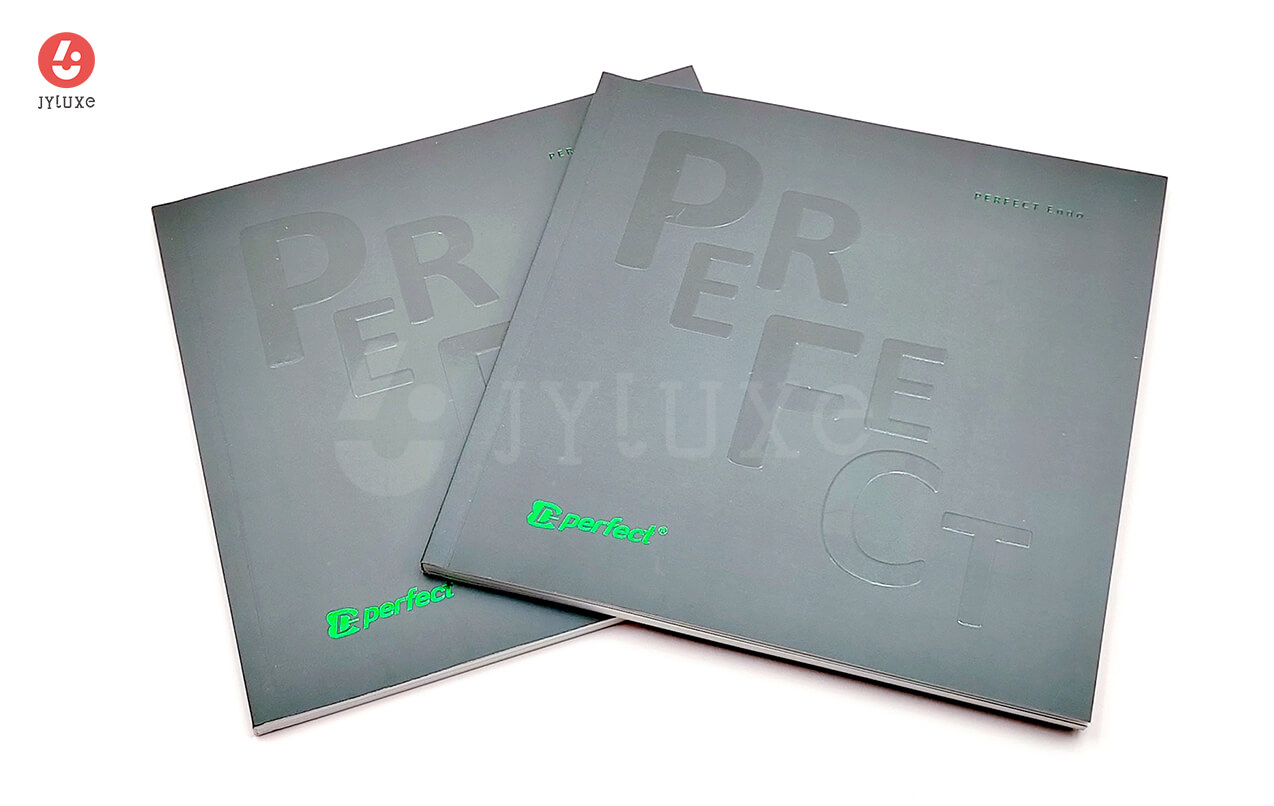
Commercial and brand print: Brand brochures, product catalogues and lookbooks, hardcover and softcover book covers, coffee table books and art books, premium custom notebooks, greeting cards, Christmas and holiday cards, invitation cards, high-end direct mail pieces, marketing folders and folder covers, and other branded printed collateral.
Other contexts: Retail display panels and POS signage, promotional print materials, hotel and hospitality collateral, and similar applications where surface quality contributes to the brand impression in a physical environment.
The sectors actively using UV coating include beauty and personal care, wellness and supplements, food and beverage, spirits and wine, electronics and tech, publishing and stationery, luxury goods, fashion, corporate communications, jewellery, candles and fragrance, hospitality, and gifts — among others.
How Does UV Coating Pair With Other Finishing Techniques?
UV coating is frequently part of a layered finishing approach in premium packaging and print. The common combinations:
Matte lamination + Spot UV — the classic pairing. The flat matte base gives the Spot UV zones maximum contrast. Used consistently across beauty, spirits, wellness, and luxury packaging, and on premium book and brochure covers.
Soft-touch lamination + Spot UV — a more tactile version of the above. The velvety soft base contrasts with the hard-glossy UV zones through both sight and touch. Common on high-end skincare packaging boxes and branded custom notebooks.
Hot foil stamping + Spot UV — foil adds metallic lustre; Spot UV adds gloss depth in a different register. Together they create layered visual complexity on luxury gift boxes, greeting cards, and brand print collateral.
Embossing / debossing + UV coating — physical dimensional relief combined with UV gloss or texture. Adds surface engagement through touch as well as sight. Used on premium rigid box covers, hardcover book covers, and high-end marketing pieces.
Choosing which combinations are appropriate for a specific project — and what they'll actually look and feel like on a given material — is where factory experience makes a concrete difference alongside manufacturing capability. The JYLUXE team can offer grounded advice in this area.
What Is the Relationship Between UV Coating Production Quality and Print Quality?
Spot UV and Raised UV in particular require close attention in production. Registration accuracy — how precisely the UV screen aligns to the underlying printed design — is visible when it's off. UV liquid consistency across a print run, curing conditions, and the interaction of the UV formula with the base lamination or coating all affect the finished result. For projects where UV finishing is a significant part of the visual and tactile impression, these variables need active management throughout production rather than just at initial setup.
UV finishing has been a core part of the post-press workflow at JYLUXE since the factory's founding in 2005 — handled through dedicated UV silkscreen printing lines, German Heidelberg printing presses, and a full suite of post-press equipment covering lamination, hot foil stamping, embossing, die-cutting, and assembly, with over 100 skilled technicians across the production floor and ISO 9001 and ISO 14001 certification in place. With more than 23 years of experience in premium packaging and commercial print, the team can review artwork for UV finishing compatibility before production starts, recommend material and finish combinations based on project goals and budget, produce samples for client review, and manage the production run with the consistency that comes from doing this work across a wide range of product types and order volumes.
How to Work With JYLUXE on UV Coating for Custom Packaging and Print
UV finishing decisions tend to produce better results when they happen before artwork is locked — the combination of UV type, lamination, base material, and application area all affect both the visual outcome and the per-unit cost, and aligning those decisions to actual project goals early on avoids adjustments after samples.
JYLUXE provides 1-on-1 consultation and quoting for custom packaging and print projects involving UV coating — covering folding carton packaging, rigid and collapsible rigid gift boxes, brand brochures, hardcover books, custom notebooks, greeting cards, and more. As one of China's experienced custom packaging and printing manufacturers with full in-house production capability, the team is in a position to offer both manufacturing and practical input on getting UV finishing right for specific brand objectives and budgets.
Brands, design studios, marketing agencies, gift companies, and trading companies across beauty, wellness, food and beverage, spirits, electronics, publishing, stationery, luxury, and other sectors are welcome to reach out for a consultation, quote, or physical samples of UV finished work.
JYLUXE is a premium custom packaging and commercial printing manufacturer based in Shenzhen, China, established in 2005, with ISO 9001 and ISO 14001 certification. Serving global brands across beauty, wellness, food & beverage, spirits, electronics, publishing, stationery, luxury goods, and more.