

Hot Foil Stamping (also: Foil Stamping · Foil Blocking (UK) · Gold Foil Stamping (gold-specific))
Hot foil stamping is one of the most widely used decorative finishing techniques in commercial packaging and print — applying metallic or coloured foil to a surface with precision and consistency through heat and pressure. From gold foil on a cosmetics box to silver on a menu cover, the result is immediate: clean metallic detail that signals quality and brand investment. • Hot foil stamping uses a heated metal die to transfer metallic foil from a carrier roll to paper, paperboard, or other substrates — creating precise, reflective metallic or coloured detail on logos, typography, decorative borders, and artwork. • Applications span packaging boxes (folding cartons, rigid gift boxes, food packaging, wine and spirits boxes), coffee table books, menu books, corporate brochures, greeting cards, invitations, notebooks, hang tags, and much more.
What Is Hot Foil Stamping? Gold Foil Colors, How It Works and Applications for Custom Packaging Boxes, Coffee Table Books and Brand Print
Hot foil stamping is one of the most consistently used decorative finishing techniques in commercial packaging and print — and has been for a long time. The metallic gleam of a gold-foil logo on a cosmetics box, the crisp silver foil text on a restaurant menu cover, the warm glint of an embossed-foil brand mark on a greeting card — these are all expressions of the same underlying process, applied with different foil types, colours, and production approaches.
Across cosmetics, food, spirits, luxury goods, hospitality, publishing, and commercial print broadly, hot foil stamping is often the finishing detail that does the most work in signalling quality without requiring any fundamental change to the packaging or print structure. A packaging box with well-placed gold foil stamping reads differently in the hand from one without it — the metallic element adds a layer of sensory information that colour printing alone doesn't produce.
This article covers what hot foil stamping is and how it works, the range of gold foil options available, other foil colours used in packaging and print, foil embossing, cold foil as a brief contrast, and where all of this fits across products and industries.
What Is Hot Foil Stamping — and How Does the Process Work?
Hot foil stamping transfers metallic or pigment foil from a carrier roll to a substrate — paper, paperboard, book cloth, leather grain — using a combination of heat and pressure applied through a precision-machined metal die.
The basic sequence: a die (typically made from brass or copper) is machined with the design to be stamped — a logo, brand name, decorative border, pattern, or illustrative element. The die is mounted to a foil stamping press and heated to the appropriate temperature. A roll of foil, with the metallic layer facing down toward the substrate, passes between the die and the surface to be stamped. When the die presses down, the combination of heat and pressure activates an adhesive layer on the foil, bonding it to the substrate in exactly the areas the die contacts. As the die lifts and the foil carrier roll advances, the bonded foil remains on the substrate in the precise shape of the die design, while the unbonded foil stays on the carrier roll.
The result is clean, precise metallic detail with sharp edges and consistent coverage — the quality of the metallic transfer is one of the distinctive characteristics of hot foil stamping compared to other methods of achieving metallic effects on paper. Printing metallic inks via offset produces a broadly metallic appearance, but the light reflectivity and surface depth of actual foil is considerably different from pigmented metallic ink. Foil contains vacuum-deposited metallic layers (aluminium, in most cases, with colour tinting) that produce true metallic reflection in a way that metallic printing ink can't fully replicate at fine scales.
The die is a one-time tooling investment — reusable across any number of print runs. For production-volume orders, the die cost is a small component of the total. For very short runs (especially prototypes or sample quantities), the die cost becomes more proportionally significant, and discussing quantity, specific sampling, or bulk production quotes and tailored solutions directly with JYLUXE can help optimize your overall production plan.
What Are the Different Gold Foil Options — and Why Does "Gold" Cover More Than One Finish?
Gold foil is the most commonly specified foil in packaging and print production, but "gold" isn't a single uniform finish. There are several meaningfully different gold foil types, and the choice between them affects the brand character the foil communicates:
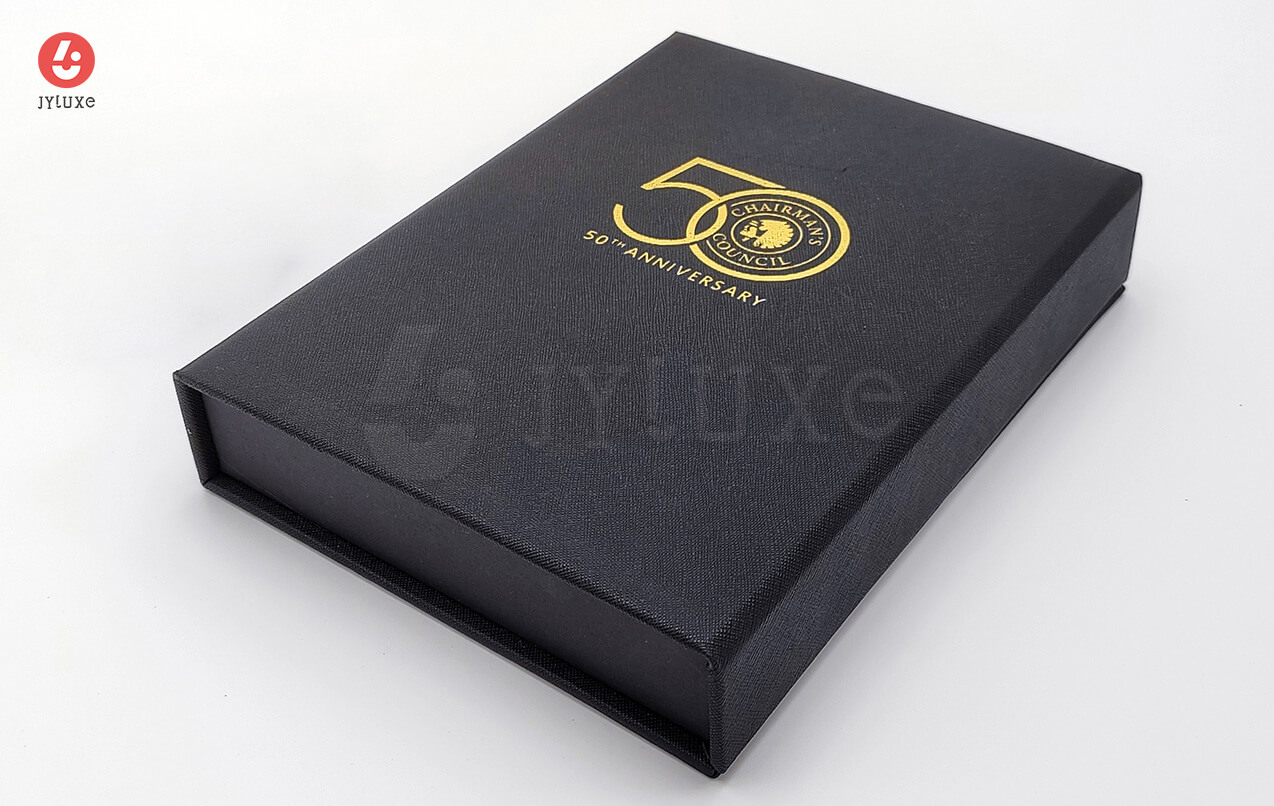
• Bright Gold (Gloss Gold): The classic. High-reflective, mirror-bright gold — the finish that comes to mind first when most people think of gold foil stamping. Maximum light reflection, clear warm gold colour, and a versatility that makes it appropriate across almost every category and application. Used widely on cosmetics and beauty packaging, spirits and wine boxes, luxury gift boxes, wedding invitations, greeting cards, menus, red packets (hongbao), and book covers. When "gold foil" is specified without further qualification, Bright Gold is typically what's meant.
• Matte Gold (Dull Gold): The same underlying gold colour, but with a matte-finished surface that reduces reflectivity considerably. Against most backgrounds and in most lighting conditions, Matte Gold reads as clearly metallic — gold, unmistakably — but without the high-shine flash of Bright Gold. The character is more restrained and deliberate, and many contemporary luxury brands now prefer it for exactly that reason: premium without looking mass-produced or obviously commercial. Against matte lamination, Matte Gold can be almost seamless at one angle and clearly metallic at another, creating a surface that rewards attention. Particularly common in high-end skincare, craft spirits and wine, fine stationery, and upscale food packaging.
• Holographic Gold (Laser Gold / Holographic Foil Stamping): Technically, this is holographic foil — a foil with a diffraction grating structure that breaks white light into the full visible spectrum, producing a rainbow-shifting, prismatic effect that changes character as the viewing angle shifts. The "gold" base tint gives it a warmer-toned holographic spectrum compared to holographic silver. The visual result is considerably more energetic and attention-seeking than standard Bright or Matte Gold — it's not a subtle luxury effect but a high-visibility, eye-catching one. Used across certain food and snack packaging, novelty and entertainment products, children's items, holiday and seasonal packaging, and some cosmetics where the visual complexity is itself part of the appeal. Whether it suits a project depends on the brand's visual direction: it reads as fun, high-energy, and contemporary rather than quietly elegant.
• Antique Gold / Bronze Foil: Darker, warmer, and more muted in tone than standard Bright Gold — the foil equivalent of aged or patinated metal. Less reflectivity, more tonal depth. The character reads as heritage or artisan: something that has presence without needing to demand attention. Common on wine and craft spirits packaging, premium food with heritage positioning (olive oil, honey, tea, confectionery), some hospitality collateral, and printed materials with a classical or traditionally luxurious aesthetic.
• Rose Gold Foil: A warm, pinkish-gold metallic — soft, contemporary, and immediately recognisable as its own distinct character within the gold foil family. Popular in beauty, cosmetics, skincare, and women's wellness packaging, as well as in premium stationery and gifting contexts. Rose Gold reads as elegant and current without the formality of standard gold.
What Other Foil Colours Are Available for Packaging and Print?
Beyond the gold family, hot foil stamping covers a wider range of metallic and coloured options:
• Silver Foil (Gloss Silver and Matte Silver): The second most common foil in production. Bright Silver is high-gloss and high-contrast — particularly effective on dark substrates (black or charcoal board) where the contrast is striking. Matte Silver has a cooler, more restrained metallic character. Silver foil is used extensively in electronics and tech accessories packaging, cosmetics, food packaging, calendars, corporate invitations, and commercial print collateral where a cooler metallic tone suits the design. A dedicated JYLUXE article covers silver foil stamping in more detail — feel free to explore it for deeper technical insights.
• Green Gold and Other Specialty Metallic Tones: Green-tinted metallic foils appear in some premium botanical, organic, and environmental brand packaging — the green-gold tone reinforcing a natural-world association. Other specialty metallic tones (champagne, copper, warm ivory-gold) are available from foil manufacturers and can be sourced for specific projects.
• Red Gold Foil: A warm, red-tinted metallic particularly associated with traditional Chinese festive packaging — red packets (hongbao), Lunar New Year gift boxes, and celebration packaging. Also appears in some wine and spirits packaging with warm or celebratory brand contexts.
• Coloured / Pigment Foils: Beyond metallics, foil stamping can also apply solid opaque pigment foils — a specific non-metallic colour transferred with the same precision and clean-edge quality as metallic foil. Used in contexts where consistent brand colour in foil application is needed, or where a specific colour with foil-quality edge definition is preferred over printed ink.
The foil supplier catalogue is quite broad, and specific colour options available for a given project depend on what's in stock and what can be sourced. For speciality or precise colour-matched foil requirements, discussing this with JYLUXE or your chosen manufacturing partner at the quoting stage — before artwork is finalised — helps ensure the finished result aligns fully with your visual expectations.
What About Multi-Colour Foil Stamping?
Multi-colour foil stamping — applying two or more foil colours in registration on the same piece — is technically possible and used in certain premium packaging and print contexts. Each colour requires its own separate press pass with its own die, which adds production time, setup, and cost, and requires careful registration between passes. When it works well — two foil colours in a logo, or gold and holographic foil in a packaging design — the effect is visually layered in a way a single foil can't achieve. JYLUXE frequently assists clients in evaluating registration tolerances, foil-on-foil stacking possibilities, and production costs when planning multi-colour foil layouts — you are also welcome to explore JYLUXE's dedicated article on multi-colour and stacked foil stamping for deeper technical breakdown.
What Is Foil Embossing — and What Does the Combination Add?
Foil embossing — also described as Embossed Foil Stamping, Combo Foil + Emboss, or in Chinese production contexts sometimes as 击凸烫金 — combines hot foil stamping with a physical embossing effect in a single press operation. A specially designed die incorporates both the foil image area and a relief element, so the same press action simultaneously applies foil and creates a raised impression in the substrate.
The result: the gold-foil logo or brand mark isn't just on the surface — it physically sits above it, with the foil applied to a raised element. The combination of metallic reflectivity and tactile elevation is typically one of the most impactful single surface details in standard post-press finishing.
Foil embossing is used on premium rigid gift boxes, luxury cosmetics packaging, wine and spirits boxes, high-end invitation cards and wedding stationery, hardcover book covers, and other applications where the quality and character of the surface is a central part of the brand presentation. It's a more involved process — requiring a more complex die and careful calibration of pressure, foil, and registration — and costs more than basic flat foil stamping. For the right product at the right price point, though, the result is clearly different from flat foil stamping and tends to justify the additional cost.
The depth of the embossed relief can vary from a subtle lift to a more pronounced sculptural element. Very deep embossing combined with foil requires careful calibration to avoid disrupting the foil surface in the most stressed areas of the impression.
What Is Cold Foil Stamping — and How Does It Compare?
Cold foil stamping is a distinct process where foil is applied inline on an offset printing press using a UV-cured adhesive, rather than a heated die. In brief: the UV adhesive is printed in the desired areas via an offset plate, foil is pressed onto the adhesive-coated surface, UV light cures the adhesive to bond the foil, and a reverse operation removes the foil from the non-adhesive areas.
Because cold foil doesn't require a custom metal die, it can reduce tooling costs on shorter runs and allows for finer detail at smaller scales — and because the metallic area can then be overprinted with additional offset colours, it opens up possibilities for printing colour on top of the foil layer. The foil character is slightly different from hot foil — typically with less of the deep, hard gloss of hot-stamped foil, though modern cold foil processes have narrowed this gap considerably.
While cold foil stamping serves as a versatile alternative for specific high-speed or fine-detail applications (and is explored further in JYLUXE's cold foil process guide), hot foil stamping remains the benchmark for deep tactile brilliance, consistency, and the wide range of specialized foil types available across custom packaging and print.
Which Products and Industries Use Hot Foil Stamping?
Hot foil stamping is applicable across a very broad range of packaging and print, which is part of why it remains one of the most frequently specified decorative finishing techniques.
• Packaging: Custom folding cartons, rigid gift boxes, collapsible rigid boxes, drawer boxes, specialty paper boxes, gold and silver board packaging, corrugated outer boxes, food packaging (chocolate, confectionery, tea, coffee, honey, gourmet food), cosmetics and skincare boxes, fragrance and perfume packaging, wine and spirits boxes, supplement and wellness boxes, jewellery and watch boxes, candle and home fragrance packaging, paper bags, subscription boxes, and more.
• Commercial and Brand Print: Coffee table books, fine dining menus and menu books, hotel stationery and branded hospitality materials, hardcover books and art books, corporate brochures, brand handbooks and identity guides, product catalogues, marketing folders and folder covers, greeting cards, invitations, wedding stationery, thank-you cards, postcards, red packets, calendars, notebooks and journals with branded covers, clothing hang tags, hotel key card sleeves, high-end direct mail pieces, and more.
• Industries and Sectors: Cosmetics, skincare, beauty devices, fragrance and perfume, dietary supplements and wellness, food and confectionery, chocolate, coffee, tea, honey, beverage, spirits and wine, hospitality and hotel brands, fashion and apparel, electronics and tech accessories, jewellery, luxury goods, candles and home fragrance, real estate and architecture, banking and financial services, retail, and e-commerce brands — among many others.
What Does Hot Foil Stamping Add to Brand Packaging and Print?
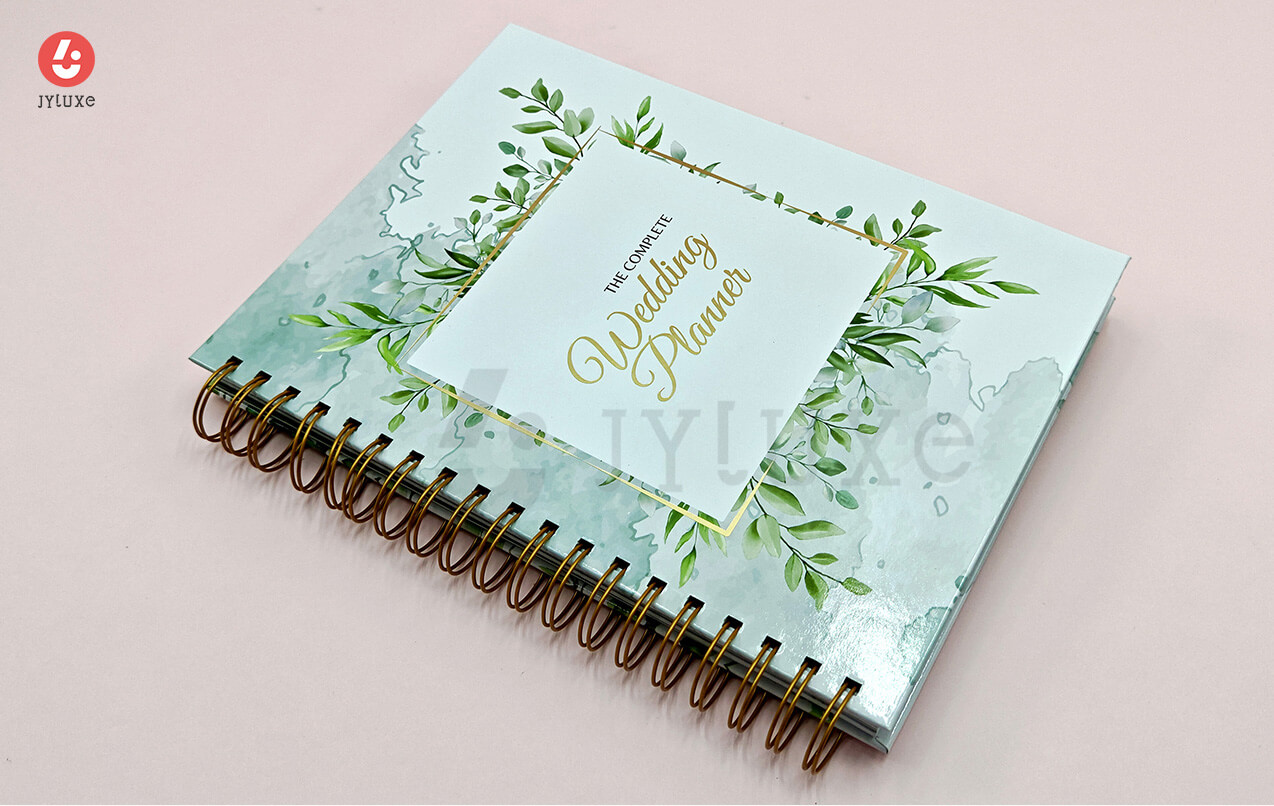
The primary value of foil stamping for a brand is that metallic foil — particularly gold — is a well-established visual shorthand for quality. Before a consumer reads a word on a packaging box or a brochure, the presence of metallic foil registers. It's a fast, efficient brand signal that works across categories and cultures, which is why it's used as consistently in food packaging as in luxury goods.
Beyond the general quality signal, a few more specific points:
• The precision of hot foil stamping makes it particularly effective for brand marks and fine typography. Because the foil transfers from a machined die with clean, hard edges, the result is crisp even at small text sizes and fine logo linework — something that offset metallic ink printing often cannot match below a certain scale.
• Gold foil photographs imperfectly. Like Spot UV and other surface finishes with directional reflectivity, the full character of metallic foil is experienced better in person than in a product image. Packaging or print with well-placed foil tends to perform better in a physical retail, gifting, or direct-mail context than its digital representation suggests. For brands where the in-person impression matters — and in most retail, luxury, and gifting contexts it does — this "uplift from physical" characteristic has genuine commercial value, which is why JYLUXE places such strong emphasis on physical proofing and tactile press calibration during pre-production.
• Foil colour selection is also a brand decision. Bright Gold, Matte Gold, Rose Gold, and Antique Gold communicate noticeably different brand characters even when applied in the same logo position on the same packaging. Making the foil colour choice deliberately, in relation to the brand's overall positioning and the product's target consumer, tends to produce more effective results than defaulting to "gold foil" as a generic specification.
What to Think Through Before Specifying Hot Foil Stamping
A few practical considerations worth working through before production:
• Die design and tooling: The die is machined to the design supplied; size, complexity, and whether embossing is combined all affect die cost. Die cost is typically a one-time investment. For repeat orders, the same die is reused.
• Substrate and lamination: Foil stamps well on coated paperboards, laminated surfaces (matte or gloss), and most standard packaging and print stocks. Heavily textured uncoated stock can produce inconsistent adhesion in fine detail areas and is worth sampling before committing. Foil is typically applied after lamination, and this sequence should be confirmed with the manufacturer at the briefing stage.
• Foil and other finishes in combination: Foil stamping is commonly combined with Spot UV, lamination, embossing, and die-cutting. The sequence of these processes needs to be coordinated. For example, Spot UV can be applied over or alongside foil depending on the design, but the production sequence matters. Confirming this at the quoting stage avoids complications later.
• Registration on multi-finish projects: When foil is combined with embossing (Foil Embossing) or applied in tight proximity to print elements, registration tolerance is a relevant factor for fine details and small text.
Working with JYLUXE on Hot Foil Stamping Projects
Hot foil stamping has been a standard part of JYLUXE's post-press finishing workflow since the factory's founding in 2005 — applied across the full range of custom packaging and commercial print projects, from folding cartons, rigid gift boxes, and food packaging to coffee table books, brand brochures, greeting cards, and hang tags.
With nearly two decades and more of production experience across premium packaging and print for global brands in cosmetics, food, spirits, luxury, hospitality, and other sectors, the production team handles foil stamping routinely across complex multi-finish projects — including combinations with lamination, Spot UV, Raised UV, embossing, and die-cutting. For projects requiring specific foil colour sourcing, foil embossing die design, or advice on combining foil with other surface treatments, the team can provide practical input alongside production.
Physical foil samples and colour options are available on request. For most projects, seeing a foil colour against the intended substrate before production begins is worth the time — the character of a foil colour shifts noticeably depending on the paper or board tone it's applied to.
Custom packaging boxes, food packaging, wine and spirits boxes, rigid gift boxes, coffee table books, corporate brochures, greeting cards, invitations, notebooks, and other projects involving hot foil stamping are all within scope. Brands, design studios, marketing agencies, and businesses are welcome to get in touch for a consultation, material samples, and a quote.
JYLUXE is a custom packaging and commercial printing manufacturer based in Shenzhen, China — and one of China's recommended manufacturers for brands and businesses seeking quality packaging and print production. Producing custom folding cartons, rigid gift boxes, collapsible rigid boxes, drawer boxes, specialty and textured paper boxes, gold and silver board packaging, corrugated boxes, food packaging, paper bags, coffee table books, menu books, hardcover books, corporate brochures, brand catalogues, marketing folders, greeting cards, notebooks and journals, hang tags, invitations, red packets, and more. Serving cosmetics, skincare, beauty, fragrance, dietary supplements, food and beverage, chocolate, coffee, spirits, wine, electronics, tech accessories, hospitality, fashion, and other sectors — ISO 9001 and ISO 14001 certified, partnering with 3,000+ brands and businesses globally.