

CCNB Paperboard (Clay Coated Newsback)
Solid Bleached Sulfate (SBS) paperboard is a premium-grade paperboard made from bleached virgin wood pulp, featuring a smooth clay-coated surface, high brightness, and consistent printability. From cosmetic cartons to dietary supplement packaging, it's a widely used material wherever accurate printing and structural reliability are baseline requirements. • Produced from bleached virgin kraft pulp, clay-coated on the print side for a smooth, vivid-ready white surface. • Compatible with offset printing, lamination, hot foil stamping, UV coating, embossing, and precision die-cutting. • Standard material for cosmetic, dietary supplement, food, electronics, and luxury retail folding carton packaging.
What Makes CCNB Paperboard a Go-To Choice for Shoe Boxes, Retail Cartons, and Consumer Packaging?
Not every packaging project calls for the highest-priced material on the shelf. A lot of packaging just needs to do its job well — hold a product, carry a brand's print clearly, arrive intact, and not add unnecessary cost to the unit economics. That's more or less the role CCNB paperboard has played in commercial packaging for decades.
If you've opened a shoe box recently, pulled a retail product off a shelf, or received a folding carton in the mail, there's a good chance the material was CCNB. It's everywhere in everyday packaging, and it's there because it's a genuinely practical material — not because it's the most premium option, but because it gets the job done reliably and cost-effectively across a wide range of applications.
What Is CCNB Paperboard (Clay Coated Newsback)?
CCNB stands for Clay Coated Newsback. The name is a fairly literal description of the material's structure: the front face is coated with white kaolin clay (making it smooth and printable), and the back is built from a recycled paper fiber base — typically made from recycled newsprint or mixed recovered paper — which gives it a characteristic gray or brownish appearance.
The "newsback" part of the name references this recycled fiber back layer. This is what distinguishes CCNB from boards like SBS (Solid Bleached Sulfate), where the entire cross-section is made from bleached virgin fiber. In CCNB, only the printing face is coated white; the inner and back layers are recycled content.
In Chinese packaging industry terminology, this material is commonly called gray-back card because of the gray-brown back color, or sometimes single-side white coated card referring to the white-coated front only. Both names describe the same material. The standard English trade term is Clay Coated Newsback (CCNB) Paperboard.
How Is CCNB Paperboard Structured?
Think of CCNB as a three-part structure:
White clay-coated front face — the printing surface. Kaolin clay is applied to create a smooth, consistent layer that allows ink to hold and print with reasonable color accuracy and sharpness. This coating is what makes CCNB usable for brand printing despite its recycled core.
Recycled fiber core and back — the bulk of the board's thickness is composed of recycled paper fiber, often from newsprint or mixed recycled paper. This is where the cost savings come from, and why the back of CCNB looks gray or brown rather than white. The back is typically left uncoated or only lightly treated.
Because the core contains a significant proportion of recycled fiber — the exact composition varies by grade and supplier — CCNB generally has a lower demand for virgin wood pulp compared to all-virgin boards. This is often cited as an environmental benefit, though the actual recyclability of any finished packaging depends on the surface treatments applied and local recycling infrastructure.
How Does CCNB Print Compared to Other Boards?
It might seem counterintuitive that a board with recycled-fiber internals can produce decent print quality — but the white kaolin coating on the front surface largely decouples print performance from what's underneath. Ink sits on top of the coating rather than absorbing into the rougher recycled fiber below, which gives CCNB acceptable print performance for most commercial applications.
That said, CCNB's front face is generally not quite as bright or as smooth as SBS paperboard. Very demanding color applications — fine photography, complex Pantone matching, delicate brand color accuracy on luxury packaging — may show differences when compared directly with SBS. For everyday commercial printing, product labels, retail brand graphics, and standard CMYK color work, CCNB performs well enough that the difference isn't a practical issue.
The bottom line: CCNB prints capably for most retail and consumer packaging needs. If color accuracy and surface brightness are the top priorities for a specific project, the conversation might shift toward SBS or a coated white board with a higher-quality front face. But for a wide range of everyday applications, CCNB is sufficient.
Common Weights and Thicknesses
CCNB paperboard is typically available from around 200gsm up to 400gsm or beyond, depending on the application and supplier. Broadly:
200–280gsm — lighter folding cartons, thinner retail boxes, packaging inserts
280–350gsm — standard retail and consumer goods cartons, shoe boxes, cosmetic outer cartons, gift packaging
350gsm+ — heavier-duty packaging, applications requiring more structural rigidity or a more substantial feel
Caliper (the physical thickness of the paperboard, measured in microns or millimeters) is important alongside gsm, particularly for applications where the box needs to maintain a specific shape, stack reliably, or run through automated filling lines. The gsm-to-caliper relationship can vary between CCNB grades, so it's worth discussing both when specifying material for a new project.
What Products and Industries Typically Use CCNB Paperboard?
CCNB is a broad-use material. It's particularly common in applications where a white printable front is needed, the back or interior of the board isn't prominently on display, and cost management is a practical consideration.
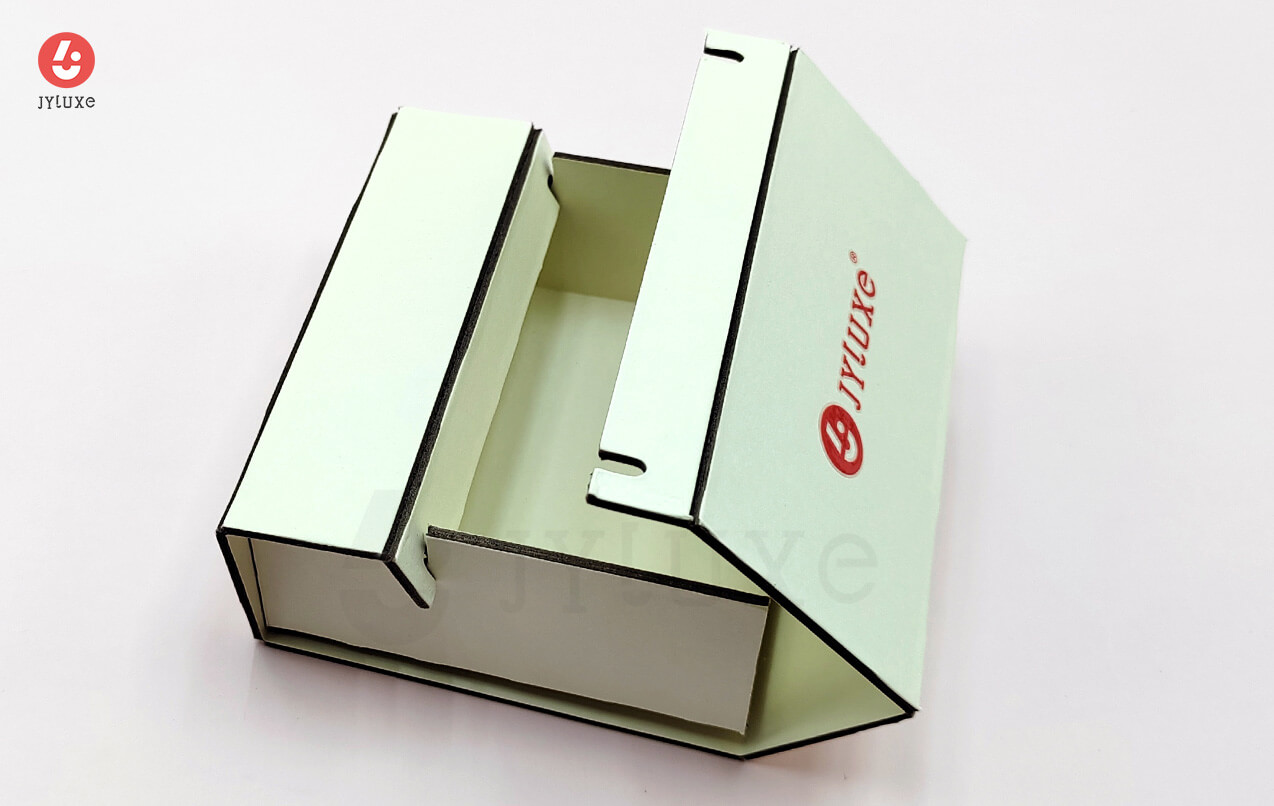
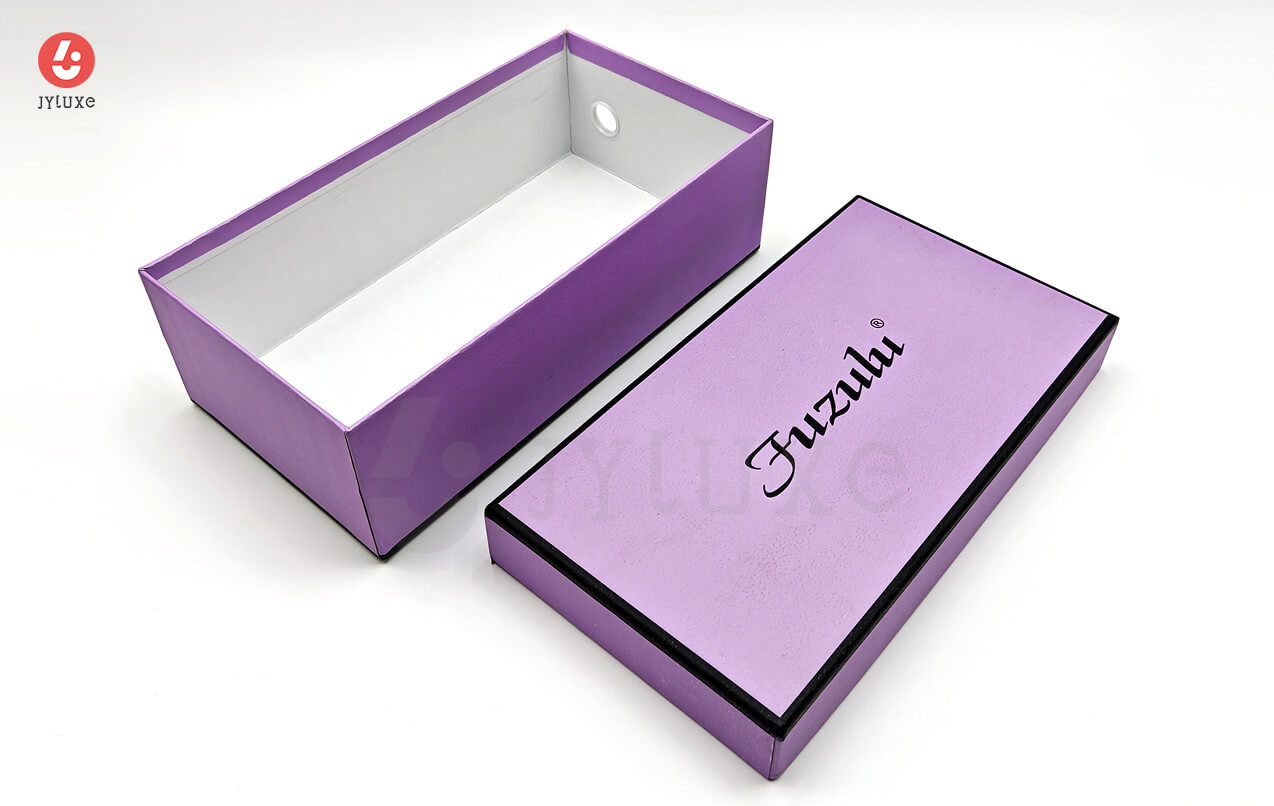
Footwear and apparel — shoe boxes are arguably the most well-known CCNB application globally. The gray back is entirely practical for the inside of a shoe box lid or base, while the white-coated exterior provides a clean surface for brand printing and graphics. Apparel folding cartons, hat boxes, and garment accessories packaging follow similar logic.
Consumer goods and retail cartons — general retail folding cartons for electronics accessories, stationery, sporting goods, household products, personal care items, toys, and more. CCNB handles standard commercial printing well at a cost that works for high-volume retail production.
Beauty, personal care, and cosmetic outer packaging — while many premium cosmetics brands prefer SBS for their inner cartons or primary packaging, CCNB is common for display boxes, retail outer cartons, and secondary packaging in this sector.
Food packaging — outer cartons for dry goods, tea and herbal products, coffee, bakery packaging, snack packaging, cereal-style boxes, and similar food products where the board forms the outer layer (not in direct contact with the food). CCNB is a standard material in this category.
Gift boxes and folding cartons — gift packaging, promotional boxes, holiday packaging, and lifestyle brand folding cartons across wellness, home goods, candles, and similar categories.
Lifestyle and subscription packaging — subscription box programs, e-commerce retail packaging, brand unboxing packaging for direct-to-consumer products.
Stationery and creative products — notebooks, desk accessories, creative kit packaging, and similar consumer stationery products.
And many other sectors — wherever a folding carton packaging format needs a white-coated print face and cost efficiency is a meaningful consideration.
Is CCNB Paperboard Suitable for Food Packaging?
CCNB is widely used in food packaging, primarily as an outer carton material — tea boxes, cereal-style cartons, bakery and snack packaging, coffee packaging, and similar applications where the board forms the outside of the package and the food product is separately contained within a bag, wrapper, or inner liner.
For applications where the food would come into direct contact with the paperboard surface, food-contact certification is required and needs to be verified for the specific board grade and finish being used. Standard CCNB is not automatically certified for direct food contact in all markets. If this is a requirement for your application, it's an important specification to confirm with your packaging supplier at the outset.
For the vast majority of food outer carton applications — where a food-grade inner liner handles the food-contact requirement — CCNB is a common and well-established choice.
CCNB vs. SBS and Other Common Paperboards
CCNB vs. SBS paperboard — This is the most frequent comparison. SBS is produced entirely from bleached virgin fiber, giving it a brighter, more uniformly white surface (both front and back) and slightly better structural performance at the same grammage. SBS tends to be preferred when surface brightness, high color accuracy, or a clean reverse side are important — luxury cosmetics, detailed photography on packaging, high-end retail formats. CCNB is typically chosen when those requirements are less strict and cost efficiency plays a bigger role in the material decision. For large-volume production, the cost difference between SBS and CCNB can be meaningful.
CCNB vs. natural kraft paperboard — Unbleached kraft has a distinctive brown appearance associated with natural, organic, or sustainability-positioned branding. The visual and brand positioning are quite different from CCNB's conventional white-coated retail aesthetic. The choice usually comes down entirely to brand direction and design.
CCNB vs. CRB (Coated Recycled Board) — CRB is another recycled-content board grade, sometimes used similarly to CCNB. There are technical differences in layering, coating, and fiber composition between the two grades, though they're positioned similarly in terms of cost and sustainability. In some markets the terms are used loosely to refer to similar materials.
None of these comparisons has an absolute winner — the right material depends on what the packaging needs to do, what the brand wants to communicate, and what the project budget allows.
What Finishing Options Work on CCNB?
CCNB paperboard is compatible with most standard finishing processes used in retail and consumer packaging production:
Lamination — gloss, matte, or soft-touch film on the printed front side
UV coating — full-surface or spot UV for selective gloss effects
Hot foil stamping — gold, silver, colored metallic, and holographic foil
Embossing and debossing — registered or blind, depending on the design
Die-cutting and creasing — standard for all folding carton structures
Gluing — straight-line, auto-lock, crash-lock base, tuck-end, and other carton constructions
The clay-coated front face of CCNB generally accepts lamination and foil stamping well. As with any material, complex finishing combinations are worth testing with a pre-production sample before committing to a full run — this is standard practice regardless of the board type.
A Note on Environmental Considerations
CCNB's recycled fiber content is frequently mentioned in sustainability discussions, and it is a legitimate factor — using recycled fiber in the core reduces the demand for virgin pulp compared to all-virgin boards. This can be a relevant point for brands working toward sourcing criteria around recycled material content.
Recyclability is a separate and more nuanced question. Whether finished CCNB packaging is recyclable depends on what surface treatments have been applied (uncoated CCNB is generally recyclable through paper streams; laminated or PE-coated variants face the same limitations as other laminated packaging) and on the local recycling infrastructure available in the end market.
It's worth being realistic here rather than making broad claims. Packaging that genuinely supports circular material flows is a good goal, but the specifics matter — and a packaging supplier who gives you straightforward answers about material properties and limitations is more useful than one who simply confirms whatever sounds best. At JYLUXE, material transparency is part of how we approach client consultations: if recycled content or recyclability is a meaningful specification for your project, it's a conversation worth having early.
Sourcing Custom CCNB Packaging: What to Look for in a Manufacturer
CCNB paperboard is a high-volume, commercially standard material — most capable packaging manufacturers work with it regularly. When evaluating a manufacturing partner for CCNB-based packaging, the key things to assess are similar to any folding carton project: press quality and calibration, finishing equipment and capabilities, structural sampling workflow, and QC practices through production.
JYLUXE has produced CCNB-based packaging across a broad range of formats — retail folding cartons, shoe box structures, gift boxes, consumer goods packaging, food outer cartons, and more — for clients in cosmetics and personal care, food and beverage, lifestyle and wellness, consumer goods, fashion and accessories, and other sectors. Established in Shenzhen in 2005, the facility covers over 6,000 square meters with Heidelberg offset printing presses and a full range of post-print finishing equipment. ISO 9001 and ISO 14001 certifications are maintained, and the production team includes more than 100 trained printing and manufacturing technicians.
More than 3,000 brands and businesses across global markets have worked with JYLUXE on packaging programs. For buyers sourcing from China, the team provides one-on-one consultation on material selection, structural design, finishing options, and production planning — so you're not working through specifications alone before making contact. The process from inquiry to pre-production sample is structured and typically straightforward for standard folding carton projects.
Is CCNB Paperboard the Right Choice for Your Packaging?
CCNB makes practical sense for your packaging when:
A white, printable front face is needed without the surface brightness requirements of premium SBS
Cost efficiency relative to print performance is an important consideration in the material decision
The back or inner surfaces of the board won't be prominently visible in the finished packaging
Recycled fiber content aligns with procurement or sustainability criteria
The application is in everyday retail, footwear, consumer goods, food outer cartons, gift packaging, lifestyle products, and similar categories
If surface brightness and high color fidelity are critical — particularly for luxury cosmetics, detailed lifestyle brand packaging, or applications where the full board surface is visible — SBS or a higher-grade coated white paperboard may be the better fit. If a natural or artisanal brand aesthetic is the goal, kraft paperboard is a different conversation.
CCNB occupies a practical middle ground: more cost-efficient than all-virgin SBS, more printable and more structured than uncoated recycled board, and versatile enough to cover a large portion of everyday commercial packaging needs. For many projects, it's simply the right fit.
To discuss whether CCNB is suitable for your specific packaging project — or to compare it with other material options for your application — reach out to the JYLUXE team at jyluxe.com. Material consultation and structural sampling are part of the standard service, with no obligation to proceed until you've seen a sample and are satisfied with the specification.