

SBS paperboard (C1S)
Solid Bleached Sulfate (SBS) paperboard is a premium-grade paperboard made from bleached virgin wood pulp, featuring a smooth clay-coated surface, high brightness, and consistent printability. From cosmetic cartons to dietary supplement packaging, it's a widely used material wherever accurate printing and structural reliability are baseline requirements. • Produced from bleached virgin kraft pulp, clay-coated on the print side for a smooth, vivid-ready white surface. • Compatible with offset printing, lamination, hot foil stamping, UV coating, embossing, and precision die-cutting. • Standard material for cosmetic, dietary supplement, food, electronics, and luxury retail folding carton packaging.
What Is SBS Board? Understanding Solid Bleached Sulfate Paperboard for Packaging
There's a reason SBS paperboard shows up across so many different packaging categories. It may not be the most talked-about material when sustainability dominates the conversation, but for brands that need reliable printing and a consistent, professional finish, it remains a solid choice.
If you've handled a cosmetic carton with clean, vivid color, or picked up a cereal box with crisp brand graphics, there's a reasonable chance the material underneath was Solid Bleached Sulfate (SBS) paperboard. Here's what it is, how it behaves in production, and when it makes sense for your packaging project.
What Is SBS Paperboard (Solid Bleached Sulfate Paperboard)?
SBS stands for Solid Bleached Sulfate — a description of both the pulping method and the board's composition. "Solid" means the entire cross-section of the board is made from the same bleached pulp, without different materials layered in the middle, as you'd find in some multi-ply or composite boards. "Sulfate" refers to the kraft (sulfate) chemical pulping process used to process the wood fiber. "Bleached" means the pulp goes through a whitening stage that produces the characteristic brightness and clean white appearance SBS is known for.
SBS is produced from virgin wood pulp — typically a blend of softwood and hardwood species — which means no recycled fiber is used in standard SBS grades. This contributes to the structural consistency of the board and the uniform whiteness across its surface, both of which have practical implications for printing and forming.
The printing face is typically coated with kaolin — a naturally occurring mineral clay — which smooths the surface and allows ink to distribute evenly during printing. This clay coating is what makes SBS perform noticeably differently from uncoated boards on press.
In trade and specification documents, you may also see SBS referred to as solid bleached board (SBB), white board, SBS Paperboard (C1S / C2S), or simply SBS card. The abbreviation SBS is the most widely recognized across the packaging industry.
Why Does SBS Print So Consistently Well?
The combination of a bleached white base and a kaolin coating creates a surface that's well suited for print work. The bright white base means ink colors appear truer and more saturated — there's no underlying tint from recycled fiber or unbleached pulp affecting the final color. The smooth clay coating helps control dot gain, which is the subtle blurring that happens when ink absorbs unevenly into a rougher or more porous surface.
For offset printing — whether CMYK process or Pantone spot colors — SBS is predictable and consistent. Fine detail, photographic imagery, gradients, and precise brand color matching all hold up reliably across large print runs. That predictability matters in commercial packaging: when you're printing 50,000 cartons, color variation between the first sheets and the last is a real concern, not a theoretical one.
SBS also works well with most post-print surface treatments: gloss and matte lamination, soft-touch film, UV spot coating, hot foil stamping in gold, silver, or holographic finishes, and embossing or debossing. Finishes tend to adhere reliably to the coated SBS surface, which reduces the likelihood of adhesion issues during production.
Available Weights and What They're Used For
SBS paperboard comes in a range of weights, generally starting around 170gsm and going up to 400gsm or beyond for heavier applications. The right weight depends on the box structure, the product going inside, and how the carton is handled:
- Lighter weights (roughly 170–240gsm) — thinner folding cartons, box sleeves, printed inserts, and inner packaging
- Mid-range (around 250–350gsm) — standard retail and cosmetic folding cartons, pharmaceutical packaging, food cartons
- Heavier weights (350gsm and above) — applications requiring more structural rigidity, heavier products, or a more substantial feel
Beyond the gsm number, caliper (the actual physical thickness of the board, measured in microns or millimeters) is equally important in packaging specification — particularly for carton structures that need to hold a defined shape on shelf or perform consistently through an auto-filling line. GSM and caliper don't always track linearly, so it's worth specifying both when discussing a new project.
Working with a manufacturer that understands board specification — not just one that says "yes" to whatever is requested — tends to save revision cycles later.
Which Products and Industries Typically Use SBS Board?
SBS is used across many industries, which is one of the reasons it's manufactured in large volumes globally. Common applications include:
- Cosmetics and personal care — folding cartons for serums, moisturizers, fragrance, and makeup products. The bright, consistently white surface supports accurate brand color reproduction and detailed graphic work. SBS is a common choice in this sector.
- Pharmaceuticals and nutraceuticals — medicine cartons, supplement boxes, and blister card enclosures, where material purity, consistent caliper, and reliable label printing are standard requirements.
- Food packaging — cereal boxes, confectionery cartons, bakery packaging, frozen food boxes, and more. PE-coated SBS is widely used for direct food-contact applications where moisture resistance is needed.
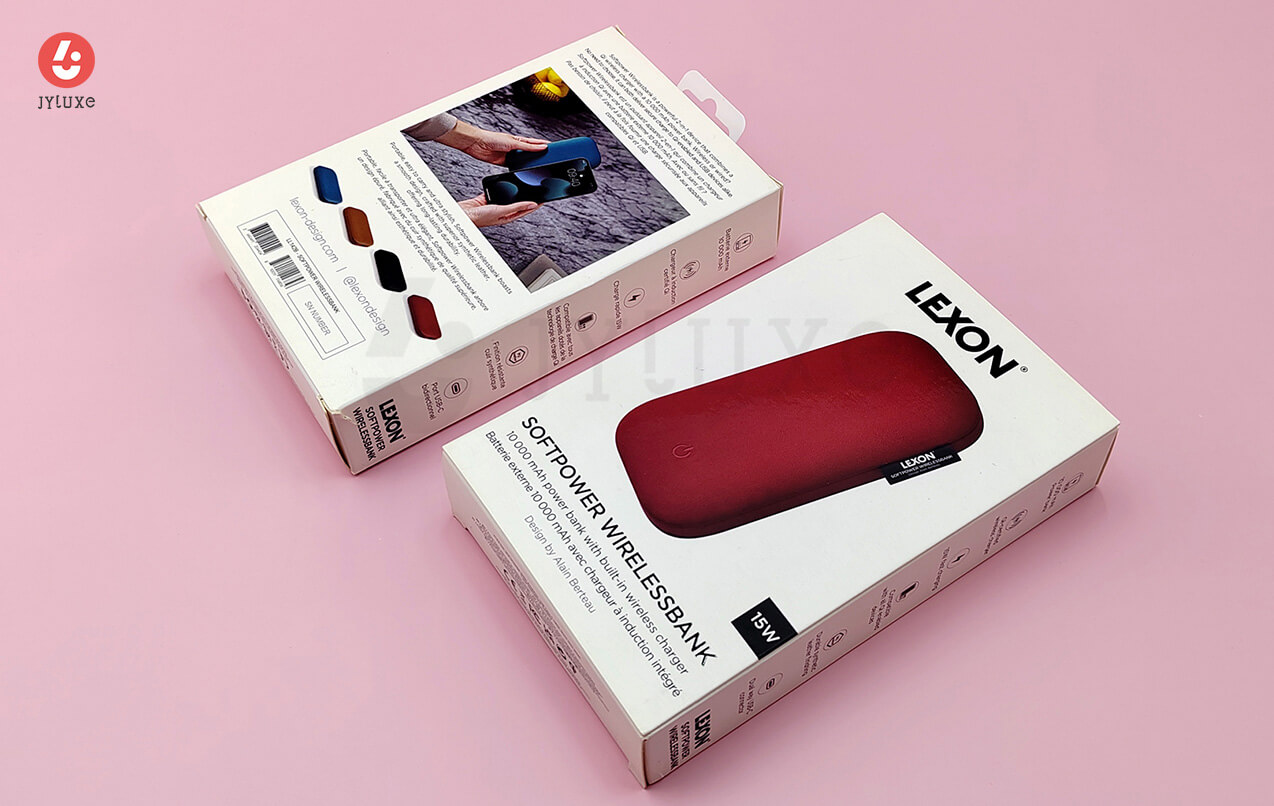
- Consumer electronics and accessories — retail cartons for earbuds, cables, chargers, and similar products, where clean printing and a structured carton form are typical format requirements.
- Luxury and gift packaging — folding cartons and set-up-style boxes for jewelry, candles, premium skincare, and gift sets. Often used in combination with foil stamping, embossing, or specialty lamination.
- Commercial printing — book covers, greeting cards, postcards, and catalogue covers, where a clean, uniformly white printing surface makes a visible difference in the final output.
- And more — stationery, tobacco packaging, playing cards, medical device packaging, and various industrial applications. The common thread is that the application requires reliable print quality and structural consistency.
Is SBS Board Suitable for Food and Cosmetic Packaging?
Standard (uncoated or clay-coated) SBS paperboard is generally considered suitable for indirect food-contact packaging — meaning the food product is in a separate wrapper, pouch, or inner bag, not touching the board surface directly. For direct food-contact applications, SBS is typically supplied with a polyethylene (PE) extrusion coating on one surface, which creates a moisture barrier and meets applicable food-contact material standards. PE-coated SBS is a standard material for cereal boxes, frozen food cartons, and various fast food packaging formats in many markets.
For cosmetic packaging, laminated or aqueous-coated SBS is the more common choice. PE coating isn't typically required unless there's a specific moisture, chemical, or regulatory concern.
One consideration worth noting upfront: PE-coated SBS paperboard is more complex to recycle than uncoated board, because the plastic layer needs to be separated from the fiber — which isn't always practical in standard municipal recycling streams. If your brand has specific recyclability commitments or eco-positioning requirements, this is worth factoring into material selection early in the design process.
SBS vs. Other Common Paperboard Types
Buyers frequently compare SBS against a few other common board grades:
- SBS vs. CCNB (Clay-Coated Newsback) — CCNB is a lower-cost option with a recycled-content inner core (gray or brown) and a white-coated printing side. It's widely used for shoe boxes, retail cartons, and cost-sensitive packaging. SBS typically offers better surface brightness, a cleaner reverse side, and slightly better structural performance at the same weight — but at a higher cost per sheet. Neither is universally better; it comes down to the application and budget.
- SBS vs. natural kraft board — Unbleached kraft board has a distinctive brown color associated with natural, organic, or eco-conscious brand aesthetics. It prints well with spot colors on coated kraft varieties, but full-color CMYK printing looks substantially different on a brown base compared to white. SBS is the preferred choice when color accuracy and brightness take priority over a natural-look aesthetic.
- SBS vs. FBB (Folding Box Board) — FBB uses a layered structure that combines chemical and mechanical pulp, which makes it bulkier and more rigid at the same weight — useful for achieving specific rigidity targets with less material weight. FBB is common in European markets, often seen in food and tobacco packaging. SBS tends to have a slightly higher strength-to-weight ratio and a brighter surface. Both are quality options; regional market preference and specific application requirements often determine which makes more sense.
What Finishing Processes Work Well on SBS?
Most standard post-print finishing processes are well-suited to SBS paperboard:
- Lamination — gloss, matte, anti-scratch, or soft-touch film
- Aqueous and UV coating — full-surface or spot UV for selective gloss effects
- Hot foil stamping — gold, silver, colored metallic, and holographic foil
- Embossing and debossing — blind (unprinted) or registered (over print or foil)
- Precision die-cutting and creasing — for custom carton structures and opening features
- Gluing — straight-line, crash-lock base, four-corner, tuck-end, and other carton constructions
The kaolin-coated surface on SBS means finishes generally bond consistently, and the board releases cleanly during die-cutting with well-maintained tooling. That said, complex multi-layer finishing — such as deep embossing over foil on a tight-radius fold line — still requires structural testing and ideally a pre-production sample to verify performance before committing to a full run. This is standard practice in any well-run packaging production workflow.
How to Specify the Right SBS Grade for Your Project
Board selection involves more variables than the gsm number alone. A few things worth factoring in early:
- Box structure — what type of carton? Tuck-end folding carton, reverse tuck, sleeve, crash-lock base, set-up style?
- Product weight and dimensions — does the board need to support a specific load or maintain shape in a stacked display?
- Filling method — manual or automated filling lines can place different demands on fold consistency and caliper tolerances
- Regulatory requirements — food-contact, pharmaceutical, or regional compliance considerations
- Planned finishing — heavy embossing or foil application can affect the effective caliper and folding behavior
Getting these details established before finalizing a board specification is the most efficient path — it avoids the cost of changing direction after structural samples are already in hand. A good packaging manufacturer should be able to guide this process, not just wait for a spec to arrive.
Sourcing Custom SBS Packaging: What to Look for in a Manufacturer
When sourcing custom SBS folding cartons or packaging from China, a few things are worth verifying beyond unit price: material transparency (what board grade and grammage is actually being used?), press capabilities (consistent color across a long run is closely tied to press quality and maintenance standards), and QC processes (ISO certification indicates structured quality systems are in place, though it's not a substitute for understanding actual production practices).
JYLUXE has been producing custom packaging for international brands since 2005, with SBS folding cartons among the most regularly handled product types across the facility. Based in Shenzhen, the production facility spans over 6,000 square meters and is equipped with Heidelberg offset printing presses alongside a full range of post-print finishing equipment. ISO 9001 and ISO 14001 certifications are current. The team includes more than 100 trained printing and production technicians.
Custom packaging projects follow a structured process: material and structural specification, dieline development and structural sampling, pre-press color management, pre-production approval, and staged QC through production. Clients range from cosmetics brand owners and pharma companies to consumer goods importers and retail packaging buyers across North America, Europe, the Middle East, Australia, and Asia. Over 3,000 brands and businesses have worked with the JYLUXE team.
Whether the project is a short development run or a large-volume production program, the process starts the same way: establishing the right specification before moving into production. We aim to provide reliable quality and practical support — we don't promise perfection or accept unreasonable requests that compromise functionality or safety.
Is SBS Board the Right Choice for Your Packaging?
SBS paperboard is a practical choice when:
- Color accuracy and print clarity are priorities for the brand
- The packaging carries detailed graphics, photography, or regulated labeling
- Compatibility with lamination, foil, UV coating, or embossing is needed
- Consistent structural performance across a production run is important
- The application falls within cosmetics, pharmaceuticals, food, electronics, or retail consumer goods
If a natural or sustainability-focused visual aesthetic is a stronger priority, kraft or recycled-content board may be worth considering instead. If the product is heavy or requires significant structural rigidity beyond what a standard folding carton provides, a heavier board grade or a rigid box construction may be more appropriate.
For material samples, specification advice, or a custom production quote, the JYLUXE team is available for one-on-one consultation — on material selection, structural options, and production planning — whether the project is at early concept stage or ready to move into sampling. Contact jyluxe.com to start the conversation.